BMO Field Temporary Stands Spark Safety Debate Ahead of World Cup 2026

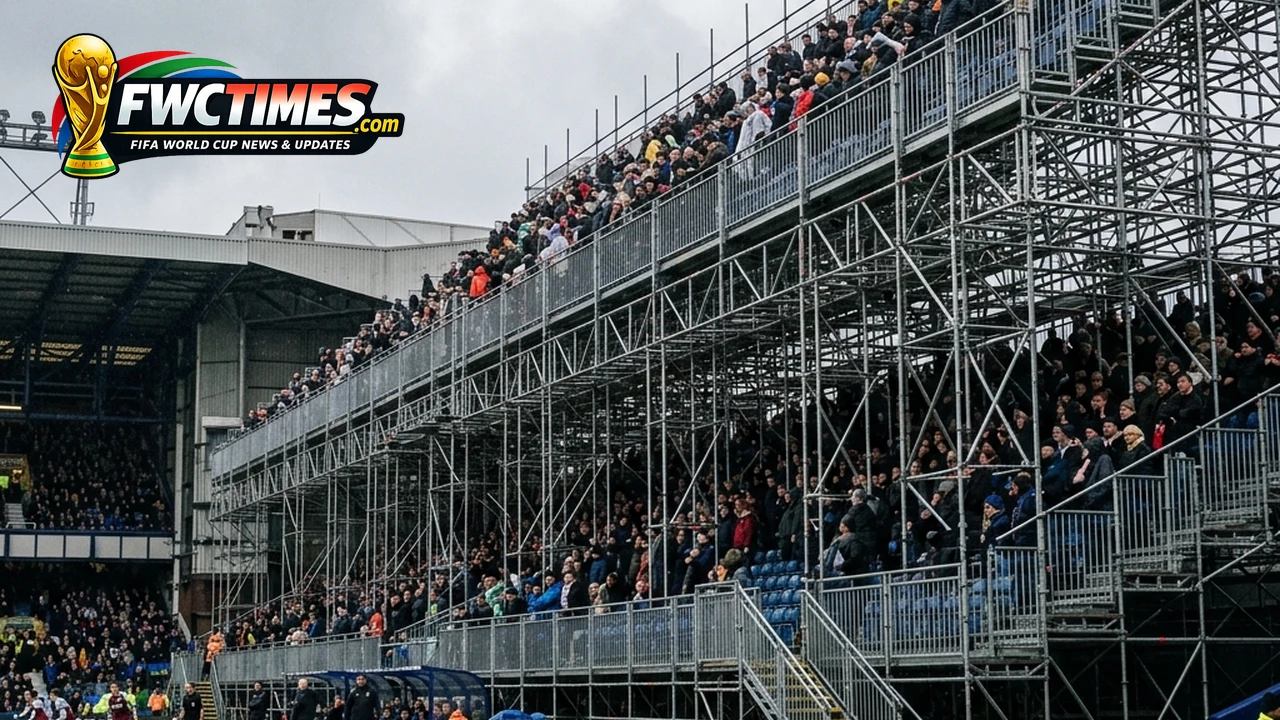
Videos of BMO Field’s new temporary grandstands went viral in early March 2026, with fans describing the steep steel structures as shaky and unsafe. The footage spread across social media within hours, forcing the City of Toronto and stadium operator Maple Leaf Sports and Entertainment to issue public safety statements before the controversy grew further. Roughly 17,000 temporary seats were added to push the venue’s capacity past 45,000 for the FIFA World Cup 2026. Officials insist every section meets both FIFA sightline standards and City of Toronto building codes. Despite the reassurances, skepticism from fans online has not fully disappeared.
What the Viral Videos Actually Showed
The footage circulating online came from various angles around BMO Field, all captured during the construction and installation phase in late February and early March 2026. Fans zoomed in on the visible steel scaffolding frames beneath the seating platforms, pointing at how steep the rake of the upper tiers appeared from street level. Some clips showed the structures from pitch level, where the height of the temporary sections looked particularly dramatic against the existing permanent bowl. The visual contrast between the older stadium architecture and the newly bolted modular steel units triggered immediate concern among those unfamiliar with how temporary event infrastructure works.
No video or credible report confirmed actual movement or structural failure at any point. Observers who described the stands as “shaking” were reacting to the steep visual appearance and the unfamiliar exposed steel frames rather than any confirmed engineering problem. Temporary grandstands of this type rely on a bolted modular system that is specifically designed to distribute load evenly. The visual exposure of the framework is a design feature of the system, not a flaw.

City of Toronto and MLSE Official Response
Maple Leaf Sports and Entertainment confirmed that the temporary seating structures were designed and built by globally recognised specialists in event infrastructure. The company stated that similar modular systems have been deployed at BMO Field before, including during the 2016 MLS Cup and the 2016 Grey Cup, without any structural incident. City of Toronto agencies reviewed and approved the designs at multiple stages throughout the construction process before any section was cleared for occupancy. The approval chain includes local building code compliance checks and engineering sign-offs specific to temporary public assembly structures.
In late March 2026, MLSE officially completed and unveiled the renovated stadium. The city released point-of-view photographs taken from seats inside the new temporary sections to show the actual sightlines fans would experience. The images demonstrated clear views of the pitch from across all new tiers. City officials used these photographs to directly counter the worst of the online speculation and to demonstrate that the viewing experience inside the stands does not match the alarm generated by exterior footage. Canada will open their tournament campaign at this venue on June 12, 2026.
How Temporary Stands Are Built to Handle Crowds
Temporary grandstand systems used at major international events are engineered to specific load-bearing tolerances that exceed the expected weight of a packed crowd. The bolted modular steel frames are tested for both static load (the weight of seated fans) and dynamic load (the movement generated when fans stand, jump, or sway together). Engineers calculate resonance frequencies during the design phase to ensure the natural frequency of the structure does not match the rhythmic movement of a large crowd. When both frequencies align without correction, it creates perceptible vibration. Structural engineers add damping elements precisely to prevent this effect.
Toronto’s temporary stands were assessed under these same engineering principles before approval. The steep rake that alarmed viewers online is a deliberate design decision. A steeper angle gives upper-tier fans a closer sightline to the pitch. Flat temporary stands pushed further back from the field would provide a worse viewing experience for the same number of seats. MLSE chose the steeper configuration specifically to improve the quality of the spectator view, not to maximise row count.
What This Means for Fans Attending the Matches
Fans who have purchased tickets in the temporary sections should expect an elevated viewing angle that puts them closer to the action than a comparable seat in a flat permanent bowl. The steep pitch means that each row is positioned above the one in front rather than behind a wall of heads. The sightline from these sections to the near touchline and both goals is unobstructed for the vast majority of seats. Entry and exit routes for the temporary sections are separated from the permanent bowl flows, and the City of Toronto’s matchday planning includes specific crowd management guidance for those tiers.
Anyone who remains concerned about the structural integrity of the stands can note that the venue will host multiple United States group stage matches and Canada’s opening fixture before reaching the knockout round. The structures will carry full crowds repeatedly in the weeks before any high-profile match. Stadium authorities will monitor each event and address any engineering concern that emerges during actual use well ahead of the later stages of the tournament.
Frequently Asked Questions
The stands completed their final approval checks in late March 2026 and will carry full crowds at multiple matches before the tournament reaches its later stages.
Stay tuned to FWCTimes.com for the latest FIFA World Cup 2026 updates.
Read Also: Katy Perry & Michael Bublé Headline World Cup 2026 Opening Ceremonies