CAF Teams in FIFA World Cup 2026: Outline

The presence of CAF Teams in FIFA World Cup tournaments brings unmatched energy and color to the global stage. African nations are preparing to challenge the world in North America. The expanded format offers a historic opportunity for the continent.
African football has shown massive progress in tactical discipline and squad organization. The qualifying rounds featured intense matches and dramatic outcomes across the groups. Fans are ready to travel in large numbers to support their squads.
Which CAF teams are in FIFA World Cup 2026?
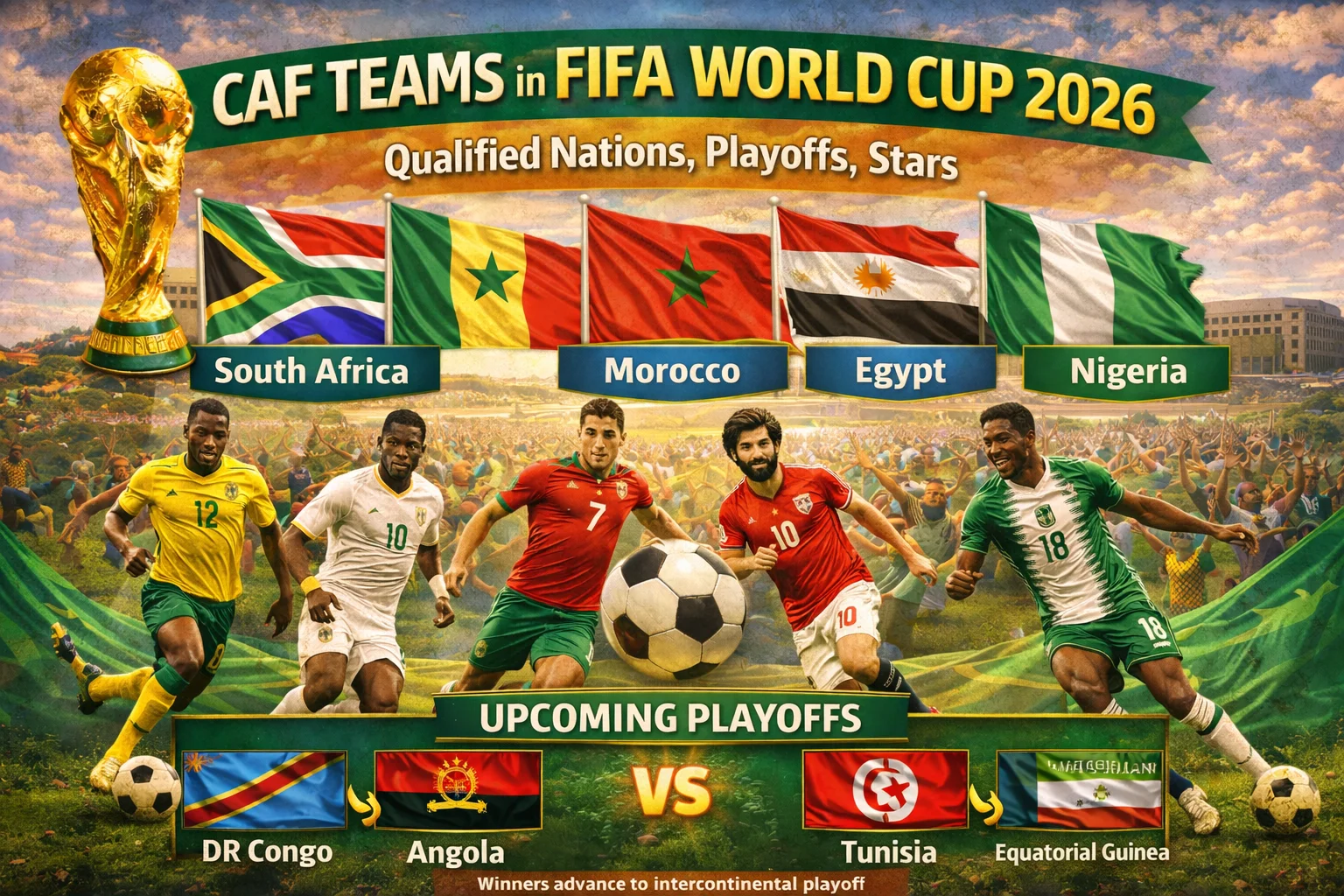
A total of nine CAF Teams in FIFA World Cup 2026 qualify directly through the group stage qualifiers. Confirmed qualified nations include Morocco, Senegal, Algeria, Tunisia, Egypt, Côte d’Ivoire, Ghana, Cape Verde, and South Africa. One additional African team can qualify through the inter-confederation play-off tournament.
How many CAF spots are available for the 2026 World Cup?
The tournament expansion provides more opportunities for African football nations. Africa now receives nine direct qualification slots for the final tournament draw. This is a significant increase from the previous allocation of five slots.
CAF Teams in FIFA World Cup slots explained
The direct spots are awarded to the winners of the nine qualifying groups. Supporters can check the Why FIFA World Cup 2026 has 48 teams article for details.
Overview of the CAF qualification process
The qualification structure was simplified to accommodate the expanded format. Fifty-four African nations were divided into nine groups of six teams each. The matches were played in a round-robin format over ten matchdays.
CAF Teams in FIFA World Cup group winners
The nine group winners secured their places after grueling campaigns. The matches featured tough away trips and challenging pitch conditions. Consistency at home was key to winning the groups.
Qualified CAF Teams in FIFA World Cup for 2026
Morocco enters the tournament with the confidence of their recent semi-final run. The squad features world-class defensive discipline and technical quality in midfield. Senegal brings a powerful physical presence and experienced leaders to their group.
Morocco
Morocco is the highest-ranked African team heading into the finals. The squad features excellent fullbacks and creative midfield players.
Senegal
Senegal is known for their physical power and rapid attacking transitions. The Lions of Teranga possess great tournament experience from recent campaigns.
Algeria
Algeria returns to the global stage with a refreshed and hungry squad. The team plays an intense pressing style with creative wide players.
Tunisia
Tunisia relies on a compact defensive block and smart game management. The Carthage Eagles are difficult to break down in tournament play.
Egypt
Egypt is the most successful nation in African football history. The team uses a direct counter-attacking style to exploit opponent spaces.
Côte d’Ivoire
Côte d’Ivoire brings a squad packed with European league experience. The African champions have a powerful midfield unit and physical strikers.
Ghana
Ghana qualified after a dramatic campaign in the group stages. The Black Stars feature rapid young wingers and technical midfielders.
Cape Verde
Cape Verde is making their debut appearance in the final tournament. The Blue Sharks surprised everyone with their tactical discipline in qualifying.
South Africa
South Africa confirmed their spot with consistent performances in their group. Details are in the South Africa FIFA World Cup 2026 schedule guide.
CAF Stars to Watch at FIFA World Cup 2026
African players continue to headline top leagues around the world. Their individual quality will be crucial for their national teams. Fans are looking forward to watching them perform.
Shortlist of potential CAF match-winners
Lethal wingers will provide the main attacking threat for counter-attacking teams. Strong central midfielders are essential for controlling match tempos.
Table: Star Players, Roles, and Qualifier Impact
| Qualified CAF Team | Why They Qualified Cleanly | Potential Headline Star | Signature Strength |
|---|---|---|---|
| Morocco | Elite consistency and control | Achraf Hakimi | Compact defending, fast wide transitions |
| Senegal | Tournament mindset, physical edge | Sadio Mané | Power, pace, and big-game management |
| Algeria | Efficient attack with experience | Riyad Mahrez | Creative wings and match tempo control |
| Tunisia | Strong structure and discipline | Ellyes Skhiri | Compact block, game-state intelligence |
| Egypt | Reliable points gathering | Mohamed Salah | Direct threat, late goals, ruthless counters |
| Côte d’Ivoire | Balanced squad depth | Franck Kessié | Midfield power and penalty-box runs |
| Ghana | High-ceiling talent waves | Mohammed Kudus | Vertical attacking and transition speed |
| Cape Verde | Best campaign in their history | Ryan Mendes | Smart movement and collective belief |
| South Africa | Cohesion and momentum | Percy Tau | Pressing patterns and quick combinations |
What CAF Teams Are Doing Differently Now
African teams are adopting modern tactical structures to compete globally. Coaches focus on defensive solidity and transitions rather than just attacking flair. The physical preparation of the players has reached elite standards.
Three tactical themes to expect from CAF teams
Expect to see compact mid-blocks that restrict opponent passing lanes. Rapid counter-attacks will exploit spaces behind advancing defenders.
What Success Looks Like for CAF at World Cup 2026
Success for CAF Teams in FIFA World Cup matches means reaching the final weekend. Morocco showed that African teams can compete with the best. Supporters can check the AFC teams in FIFA World Cup guide.
How many CAF Teams in FIFA World Cup qualify directly?
Nine African teams qualify directly as winners of the qualifying groups. One additional team can qualify via the inter-confederation play-offs.
Which African team qualified for the first time?
Cape Verde qualified for the final tournament for the first time in their history. They secured their spot after an amazing group stage campaign.
How does the African playoff system work?
The four best runners-up play a mini-tournament to decide Africa’s play-off representative. The winner advances to the global play-off stage.
Who is the play-off representative for CAF?
DR Congo won the continental playoff to claim the inter-confederation play-off spot. They will play against teams from other regions.
Conclusion
The campaign for CAF Teams in FIFA World Cup 2026 will be historic. With nine direct spots, the continent has their largest representation ever. The mix of traditional giants and fresh debutants promises great matches.
The tournament is a historic opportunity to showcase the progress of African football. The tactical discipline and physical power of the teams are world-class. Good results will inspire millions of young players across the continent. The anticipation is building globally.
Read Also: conmebol-teams-in-fifa-world-cup