World Cup 2026 Stadiums With Roof, Shade and Cover Guide
If you’re traveling in June and July, comfort can shape your whole matchday. World Cup 2026 Stadiums With Roof are the simplest way to avoid mid-day heat, surprise rain, and long stretches in direct sun. But roof can mean very different things: a fully closing retractable roof, a fixed canopy that shades seats, or a partial cover that helps in light rain.
The World Cup runs from June 11 to July 19, 2026, across 16 venues in the United States, Canada, and Mexico. Not every host stadium is covered, so the smart move is knowing where you’ll actually get shade or full weather protection before you pick a city, a kickoff time, or a seat.
Four venues are built for full roof closure with strong climate protection: AT&T Stadium (Arlington), Mercedes-Benz Stadium (Atlanta), NRG Stadium (Houston), and BC Place (Vancouver). Several others offer major shade for seating through canopies or partial roofs, but they do not fully enclose the match environment.
World Cup 2026 Stadiums With Roof and what covered really means
Fans often picture a closed dome, but most World Cup venues are not fully indoor. For 2026, think of coverage in three tiers:
Full enclosure with retractable roof: the roof can close over the entire field area, creating indoor-like conditions when needed.
Seat-focused canopies: a fixed canopy can protect most fans from sun and light rain, while the field remains open to the elements.
Partial roofs: a roofline covers large seating sections, but open sides and an open field mean weather can still reach you.
This matters because match comfort is not only about temperature. Sun angle, humidity, sudden storms, and even long pre-game waits all hit harder when you’re exposed.
Tier 1: Retractable roof stadiums with the best weather control
These are the top choices if your goal is “least weather stress.” They are also strong candidates for daytime matches in hotter conditions, because the roof can be operated based on needs and forecasts.
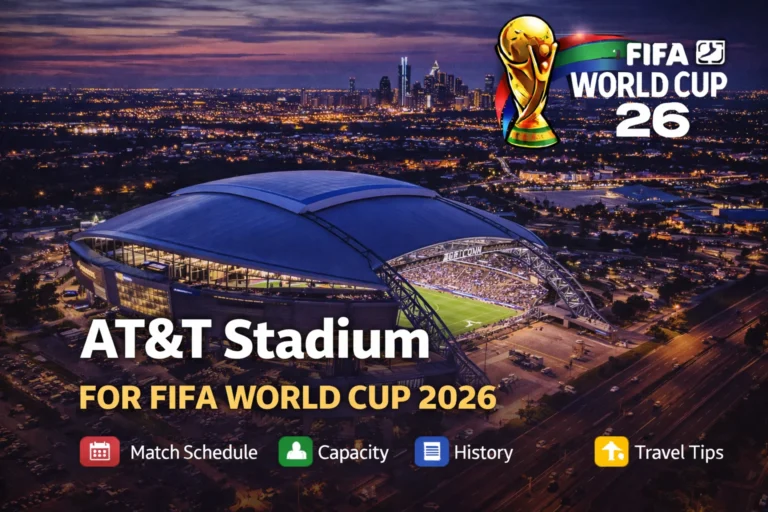
AT&T Stadium, Arlington (near Dallas)
A large retractable roof and strong air conditioning make this a high-comfort option in Texas conditions. It is set to host nine matches, including major knockout games and a semifinal, which signals how valuable controlled conditions can be.
Mercedes-Benz Stadium, Atlanta
The signature eight-panel roof design opens and closes like a camera lens. It is built for modern match presentation and climate stability. Atlanta hosts eight games, including a semifinal.
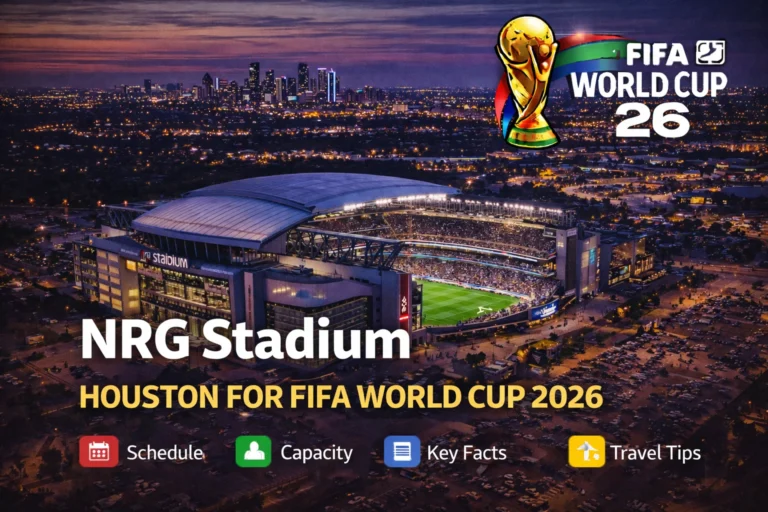
NRG Stadium, Houston
Houston’s humidity can be intense, so a retractable roof stadium is a practical advantage. NRG is set for seven matches, including group games and round of 16 fixtures.
BC Place, Vancouver
BC Place adds a key Canadian roof option. Its retractable system provides dependable protection, especially against rain, and helps keep match operations steady.
Tier 2: Canopy and heavy-shade venues
If you want shade but still like an open-air feel, these stadiums can be a sweet spot. You can often stay out of direct sun without feeling sealed indoors.
SoFi Stadium, Inglewood (Los Angeles area)
SoFi is defined by a translucent canopy that covers most seating and parts of the field area while still letting natural light through. Because the sides are open, it feels airy, but fans still get meaningful overhead cover.
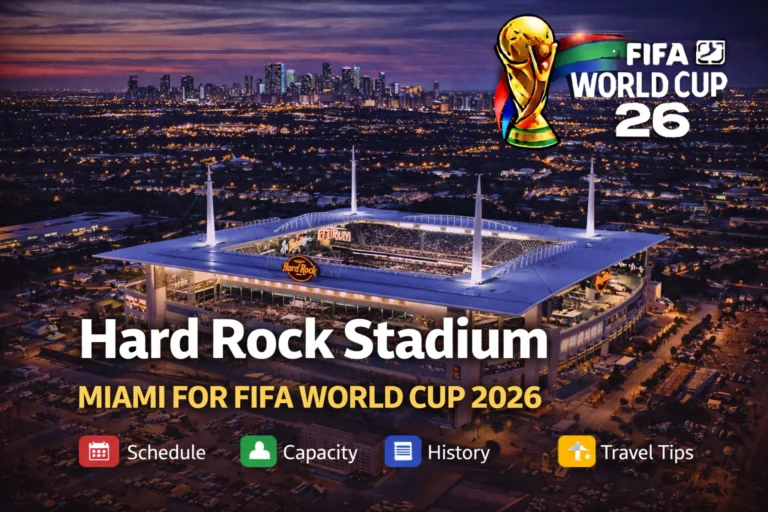
Hard Rock Stadium, Miami area
Hard Rock’s modern canopy is designed to protect nearly 90 percent of seats. You still get outdoor football atmosphere, but with far better sun protection than a typical open stadium.
BMO Field, Toronto
BMO Field was expanded for the tournament and features a canopy that covers almost all seats. For fans, that usually means more consistent shade across the bowl than you’d expect in many open venues.
Tier 3: Partial-roof venues where seat choice matters most
These venues can be excellent, but you have to be more careful about where you sit and when the match kicks off.
Lumen Field, Seattle
Lumen Field covers about 70 percent of seats with its partial roof. It can help with sun and rain in many sections, but it does not fully enclose the field. Your row and side of the stadium can make a real difference.
Roof and cover comparison table
| Stadium | Location | Roof type | What fans should expect |
|---|---|---|---|
| AT&T Stadium | Arlington, USA | Retractable roof + AC | Strong weather protection and stable comfort |
| Mercedes-Benz Stadium | Atlanta, USA | Retractable roof | Indoor-like feel possible when closed |
| NRG Stadium | Houston, USA | Retractable roof + AC | Helpful for humidity and heat management |
| BC Place | Vancouver, Canada | Retractable roof | Reliable rain protection and cover flexibility |
| SoFi Stadium | Los Angeles, USA | Translucent canopy | Major overhead cover with open sides |
| Hard Rock Stadium | Miami, USA | Seat canopy | Shade for most seats; field remains open |
| Lumen Field | Seattle, USA | Partial roof | Many seats protected; open field exposure |
| BMO Field | Toronto, Canada | Canopy | Broad seat shade coverage after expansion |
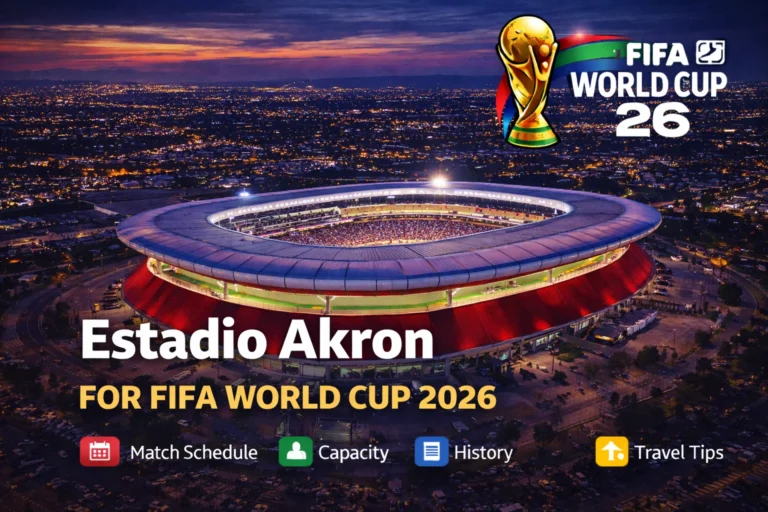
| Estadio Akron | Guadalajara, Mexico | Fixed “cloud” roof | Not fully enclosed, but strong shade design |
Which World Cup 2026 games are indoors, and which just have shade
A cleaner way to think about it is not which games are indoors, but “which venues can become indoor-like.”
If your match is at AT&T, Mercedes-Benz, NRG, or BC Place, the roof can fully close, so you have the best chance at full cover and more controlled temperatures.
If your match is at SoFi, Hard Rock, BMO Field, or Lumen Field, you’re mainly buying shade protection for fans, not a sealed environment. You can still get heat, humidity, or wind effects, but you’re often avoiding direct sun for large parts of the seating bowl.
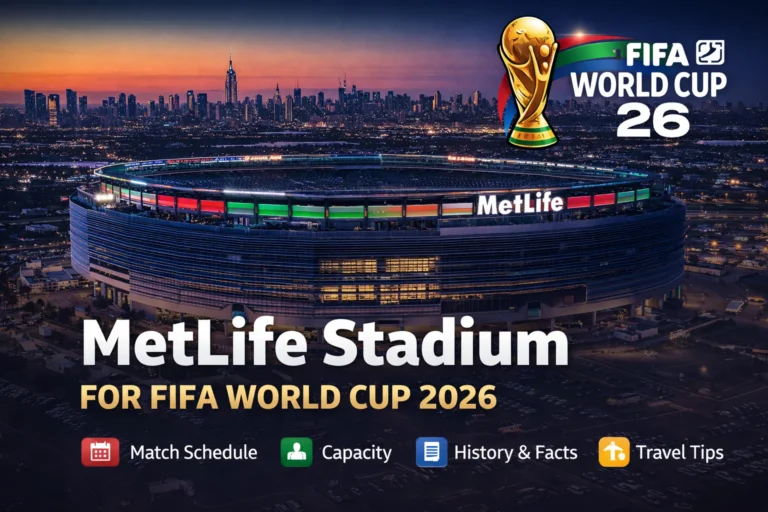
Also note that several host stadiums remain largely open-air, including the final host venue at MetLife Stadium in New York/New Jersey. In open venues, scheduling is a big deal, and evening kickoffs are often the most comfortable.
Seat strategy: how to find the best shaded seats
Shade is not evenly distributed. Two fans in the same stadium can have completely different experiences.
For canopy and partial-roof stadiums
Overhang coverage usually increases as you go higher in a section. If you’re choosing between rows, the higher rows in the lower bowl often get more consistent overhead protection than the lowest rows closest to the field.
For retractable roof stadiums
Even with a roof-capable venue, the roof position can vary. Plan as if you might walk in from hot weather outside, then feel a major temperature drop inside. Light layers can be the difference between comfortable and freezing.
For open-air venues
If you can choose kickoff time, evening matches are often the easiest on the body. If you can’t, treat sun protection like a checklist: hydration, sunblock, hat, and arriving early so you can find shaded concourses before kickoff.
Pick the right venue for your comfort goal
| Your goal | Best venue types | Stadium examples |
|---|---|---|
| Maximum weather protection | Retractable roof + climate control | AT&T, Mercedes-Benz, NRG, BC Place |
| Shade without feeling fully indoors | Canopy-heavy seating cover | SoFi, Hard Rock, BMO Field |
| Some cover, but choose seats carefully | Partial roof designs | Lumen Field |
| Traditional open-air match feel | Mostly open stadiums | Many other host venues, including MetLife |
FAQs
AT&T Stadium, Mercedes-Benz Stadium, NRG Stadium, and BC Place are the key retractable-roof venues with the best chance of full cover when the roof is closed.
A small group of venues can feel indoor-like when the roof is closed. Whether a specific match feels fully “indoor” is subject to roof operations and matchday decisions, so check official announcements.
Yes, but it is not a fully enclosed dome. SoFi uses a large translucent canopy that provides overhead cover while keeping an open-air feel through open sides.
Hard Rock’s canopy is designed to protect nearly 90 percent of seats, which can be a big advantage for daytime matches in Florida conditions.
Often, yes, through smarter scheduling. Many open-air matches are planned for cooler times like evenings, but exact kickoff patterns can vary, so confirm details once your match time is set.
Conclusion
If your priority is comfort, start with the four retractable-roof venues: Arlington, Atlanta, Houston, and Vancouver. If you mainly want shade, focus on canopy-heavy stadiums like Los Angeles, Miami, and Toronto. For partial-roof venues, seat selection matters as much as the stadium itself. Plan for the conditions, then let the football be the easy part. Check Also Largest Stadiums at FIFA World Cup 2026 Ranked by Capacity.