

World Cup 2026 Seat Maps, Seating Charts, Ticket Categories
If you are planning matchday travel, World Cup 2026 Seat Maps are the fastest way to avoid bad angles and overpriced sections. FIFA does not sell tickets by “Row 12, Seat 8” in early phases. Instead, you apply or buy by ticket category, and the stadium zones behind each category matter more than the section number.
World Cup 2026 Seat Maps are zone-based, so start by picking your viewing goal (best view, best value, best atmosphere). Then match it to Category 1–4 seating zones and keep one backup category ready before you enter the ticket portal.
World Cup 2026 Seat Maps with FIFA ticket categories
FIFA World Cup stadium categories are used to group seats by view quality, height, and angle. The closer and more central your view is, the higher the category tends to be. The farther and higher you go, the lower the category usually becomes.
Categories can shift slightly by venue because every stadium layout is different. Even so, the category logic stays consistent think in zones first, then check the specific seating chart for your match.
Category 1–4 explained
Here is the simple way to picture the categories on a World Cup 2026 seating chart:
Category 1: Lower central sideline, often the best overall view.
Category 2: Corners in the lower tier, or central sideline areas in the upper tier.
Category 3: Upper corners and behind-the-goal end zones.
Category 4: Highest and farthest end/corner areas, when offered.
Some tournaments also limit Category 4 availability or apply special eligibility rules. So, treat Category 4 as “nice if available,” not a guarantee.
Ticket category zones at a glance
The fastest way to use FIFA 2026 stadium seat maps is to translate categories into what the view will feel like. Use this table as your quick comparison tool before you enter any sales phase.
| Ticket category | Typical zone on the map | What the view feels like | Best for |
|---|---|---|---|
| Category 1 | Lower tier, central sideline | Closest, most balanced angles | First-time splurge, photos, tactics |
| Category 2 | Lower corners or upper sideline | Strong view, slightly wider angles | Value seekers who still want shape |
| Category 3 | Upper corners and behind goals | Farther, but still clear | Budget trips, group buys, loud ends |
| Category 4 | Highest tiers (when offered) | Distant overview, limited supply | Lowest-cost entry, if available |
How to read a World Cup 2026 seating chart like a pro
A seating chart can look different in every host city, but your decision process should stay the same. Most buying mistakes happen when fans chase “closest” and forget “angle.”
Check the sideline angle first
Sideline seats help you read the match better. You see spacing, passing lanes, and off-ball runs with less neck turning. If Category 1 is too expensive, an upper sideline Category 2 seat can still feel like a premium football view.
Corners can be a smart compromise when prices spike, but sharp corners can also make far-side action harder to judge. Always zoom out and ask yourself: can I see both penalty areas clearly?
Check elevation and overhangs next
Higher is not always worse. A higher sideline seat can deliver a clean tactical view, especially if you like seeing team shape. The downside is distance, and very high corners can feel far away during fast transitions.
Also look for roof coverage or shade notes when available. Some venues have covered seating areas that may be placed in higher categories.
Always read “restricted view” notes
Some seats can lose sightlines due to railings, camera platforms, or stadium architecture. The map may not show every obstruction clearly, so the written note during checkout matters.
If you see any warning about a blocked view, treat it as a real risk. A cheaper ticket is not a bargain if you are frustrated for 90 minutes.
Ticket products that change how seat maps appear
Seat maps are typically shown inside the ticket selection flow for a specific match, not as one universal diagram for the whole tournament. What you are buying also changes how the seat selection feels.
Common World Cup ticket types you may see
- Single match ticket: One match in one stadium.
- Venue series: Multiple matches at one venue.
- Team-specific options: Matches tied to one team.
- Follow-my-team style options: Conditional matches if a team advances.
- Accessibility tickets: Dedicated seating and routes for fans who need them.
- Hospitality: Premium seating blocks plus service, often separate from standard tickets.
Hospitality is usually handled separately from standard match tickets. If comfort is your priority, this can be a different buying path than regular categories.
What to expect from the ticket process and timing
Based on the tournament planning mentioned in your source content, the competition window runs from June 11 to July 19, 2026, and ticket sales have been structured in multiple phases beginning around September 10, 2025. Exact availability can change by phase, and some phases may include application windows and random selection draws.
The practical takeaway is simple: seat maps can look different each time you enter, because inventory changes. That is why you should prepare two category choices before you reach the map.
A quick seat-selection checklist before you buy
- Build a two-category short list: pick your target and a fallback.
- Prioritize centrality over closeness: central sideline usually beats a close corner.
- Decide your comfort limits: steep upper decks and long climbs are not for everyone.
- Avoid panic clicks: rushing creates the most “seat regret.”
World Cup 2026 Host stadium Seat Maps
This guide references seat maps by host city, because World Cup 2026 venue layouts vary across the United States, Canada, and Mexico. These are the cities listed in your source content:
United States host cities Stadium with Seat Map
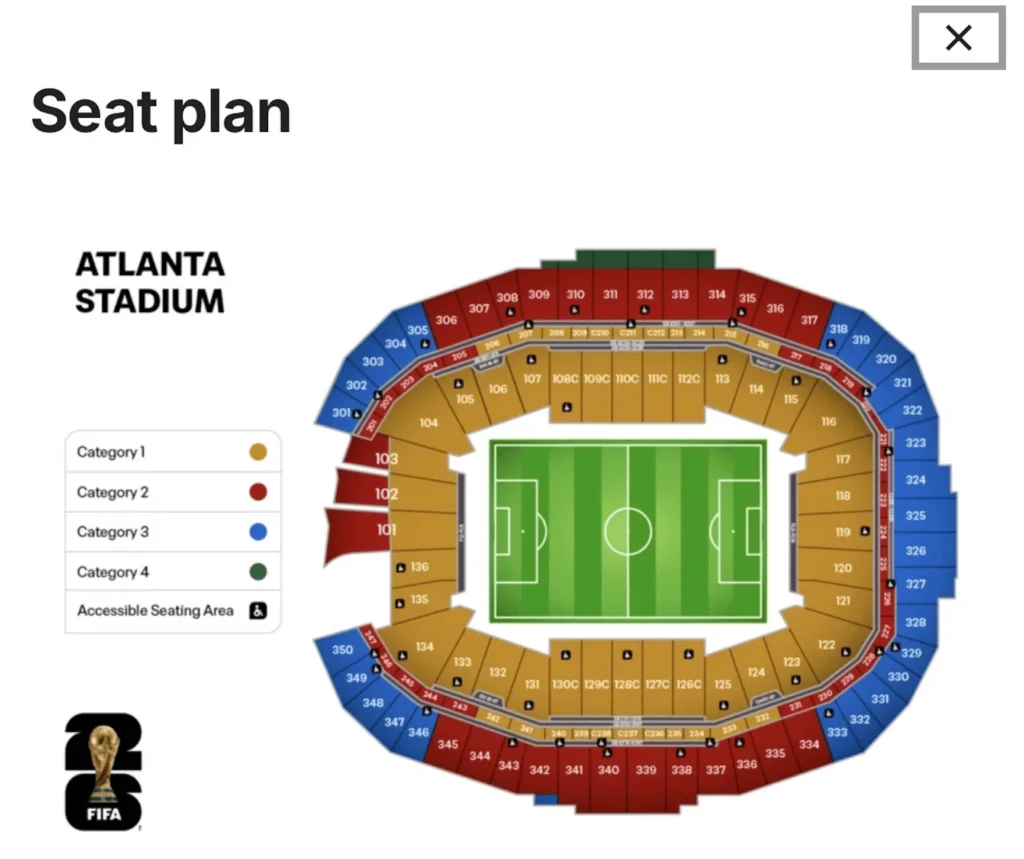
Atlanta — Mercedes‑Benz Stadium
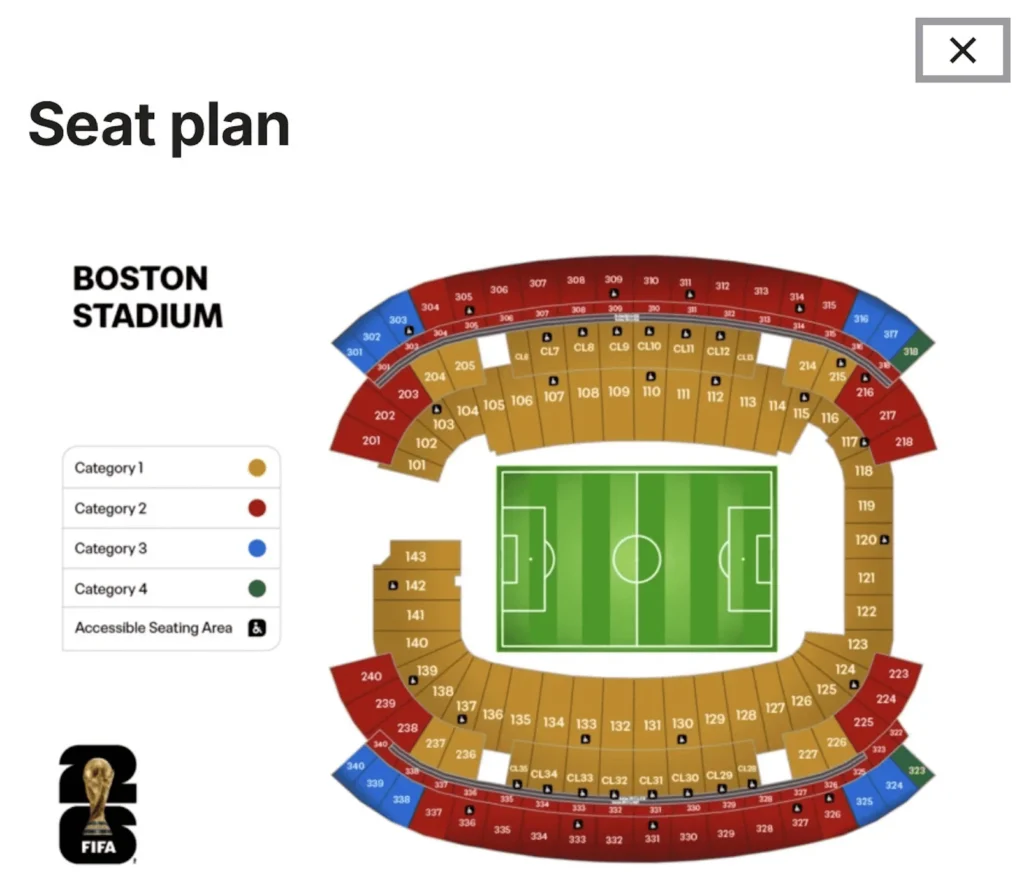
Boston — Gillette Stadium
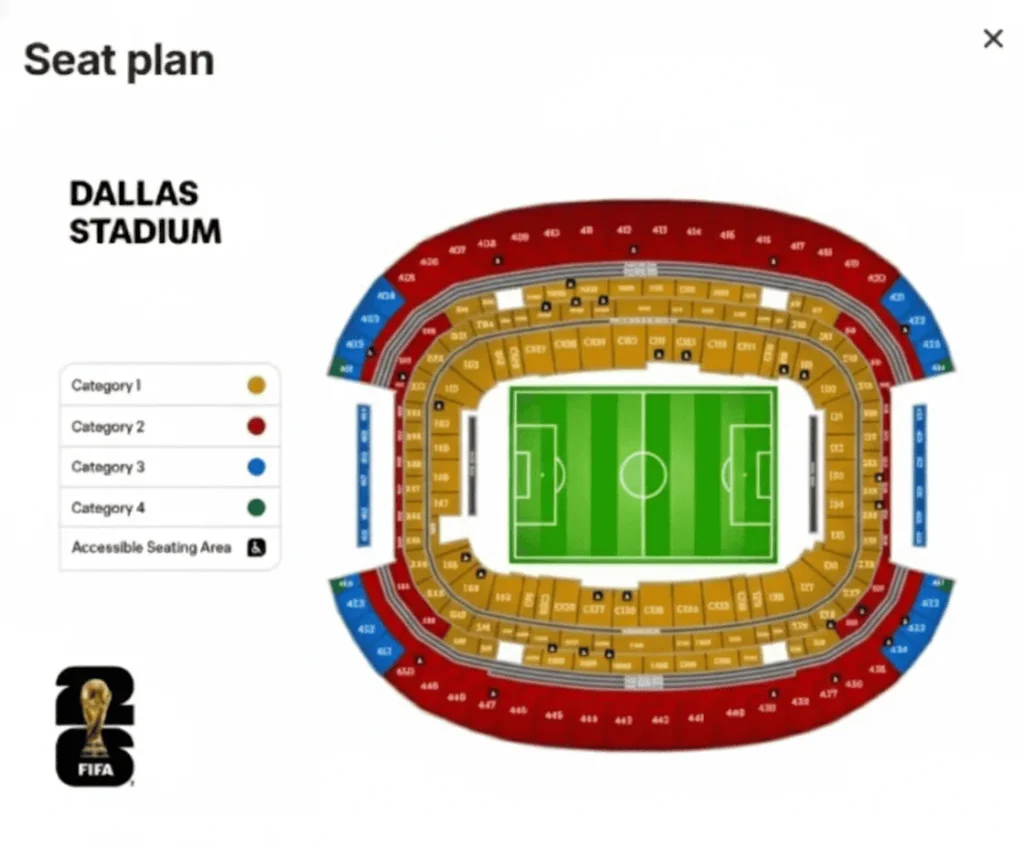
Dallas — AT&T Stadium
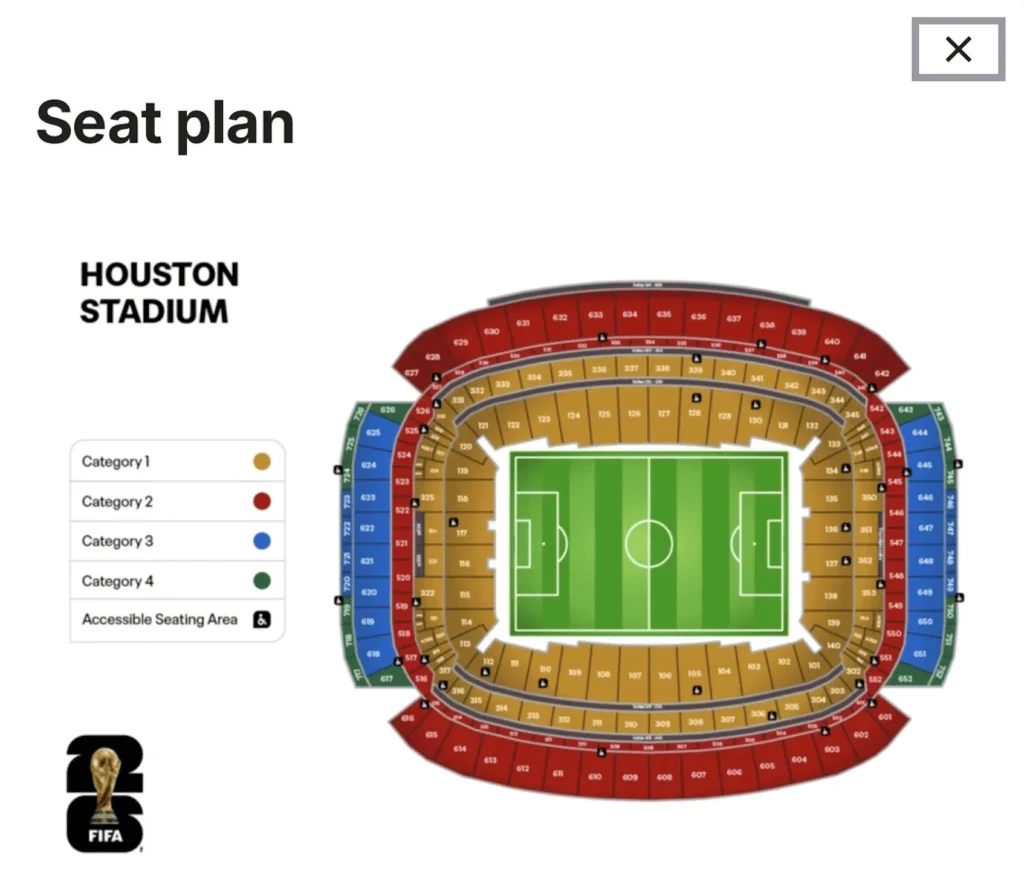
Houston — NRG Stadium
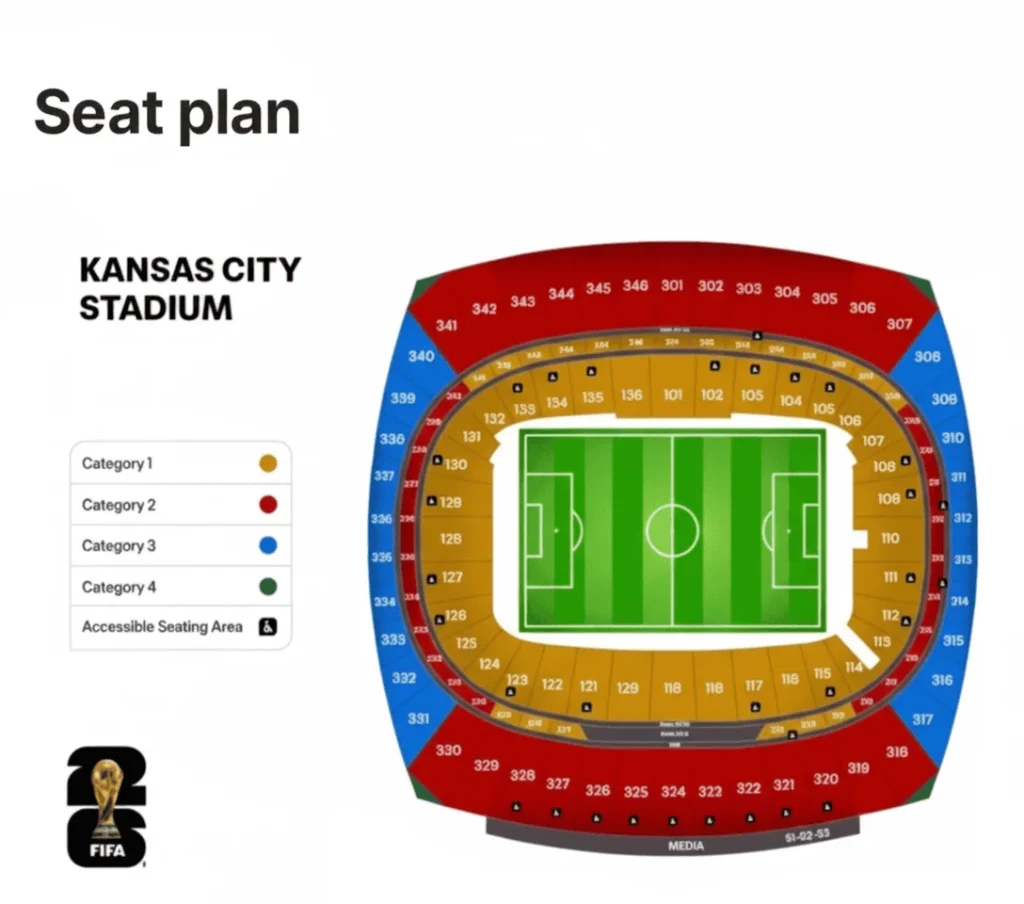
Kansas City — GEHA Field at Arrowhead Stadium
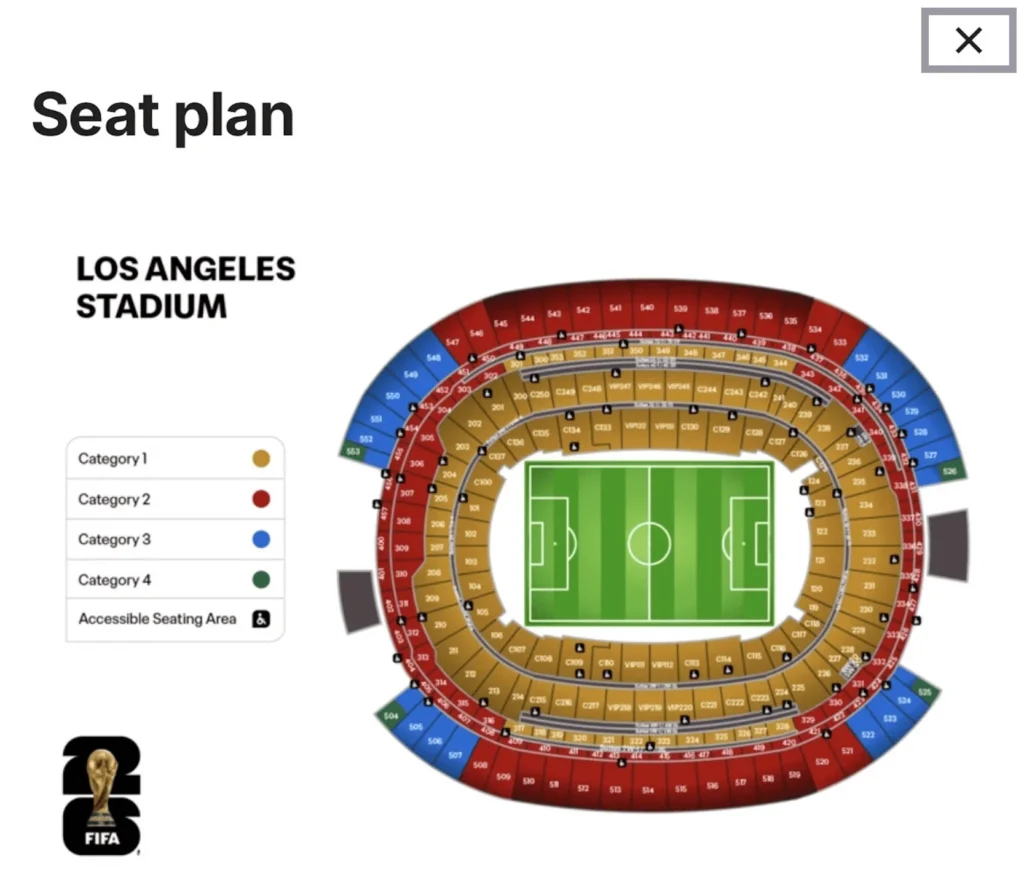
Los Angeles — SoFi Stadium
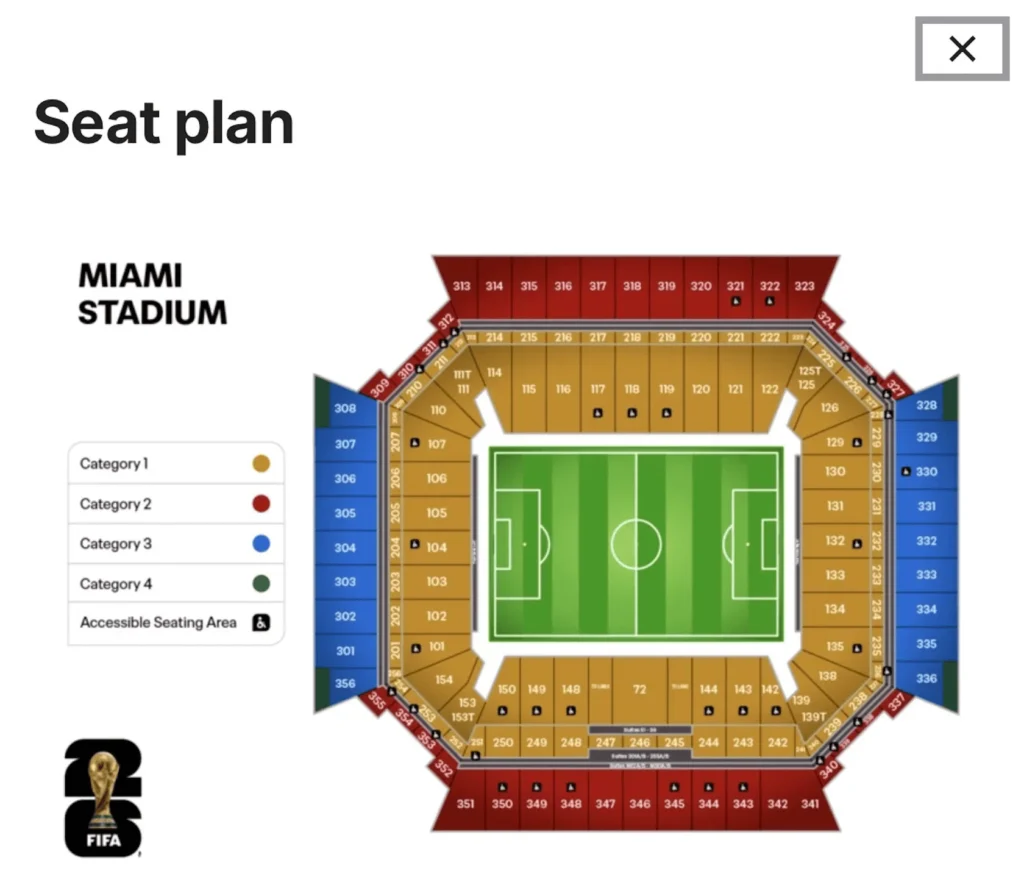
Miami — Hard Rock Stadium
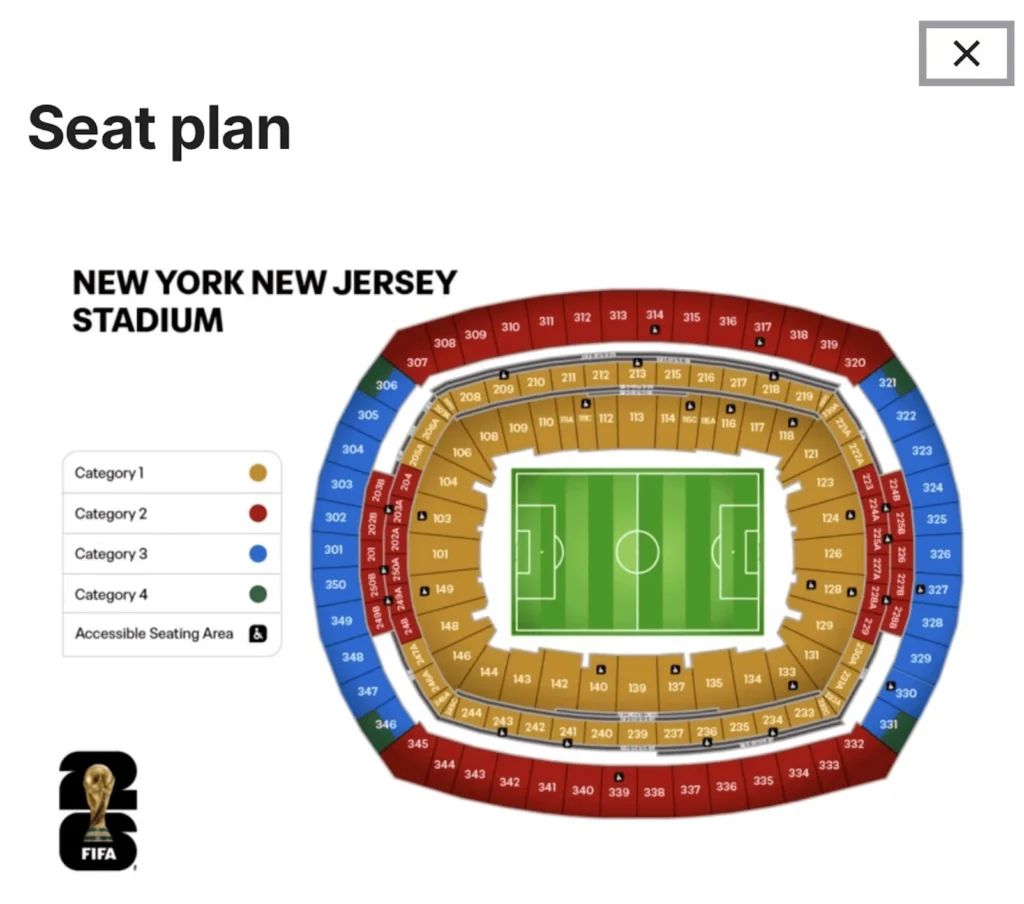
New York/New Jersey — MetLife Stadium
Philadelphia — Lincoln Financial Field
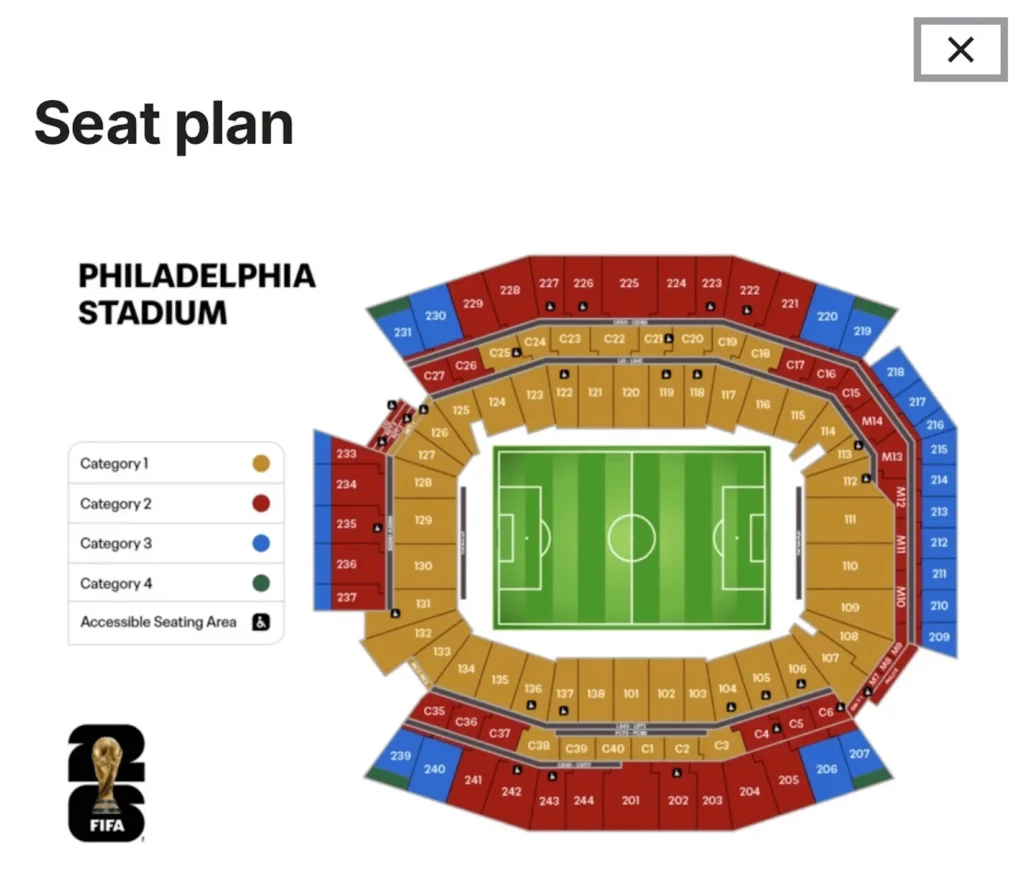
San Francisco — Levi’s Stadium
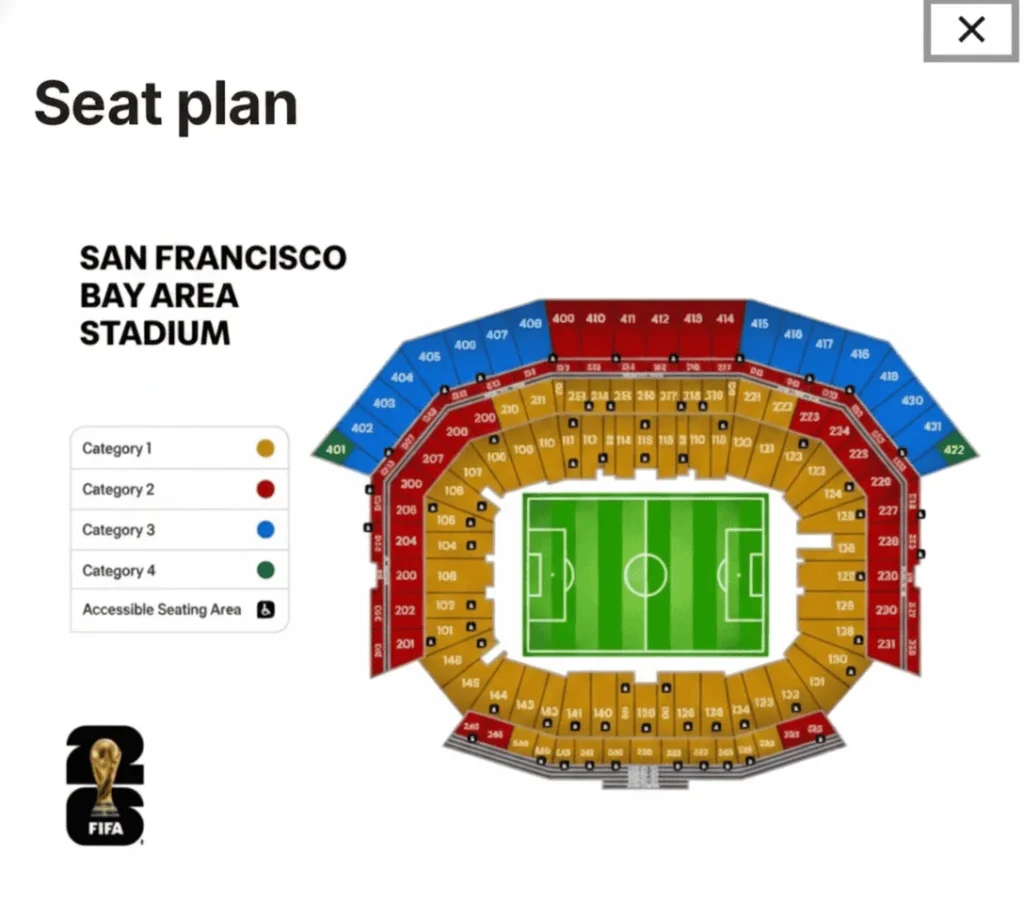
Seattle — Lumen Field
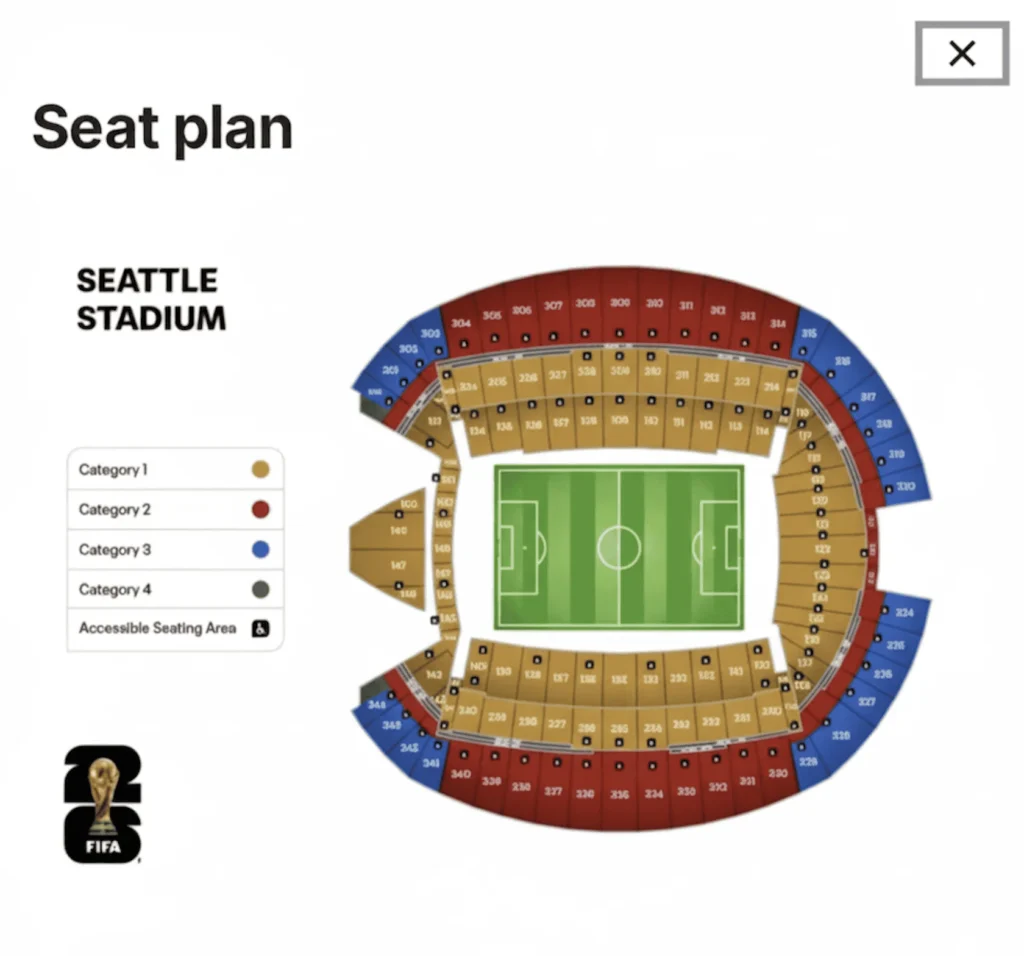
Canada host cities Stadium with Seat Map
Toronto — BMO Field Seat Plan
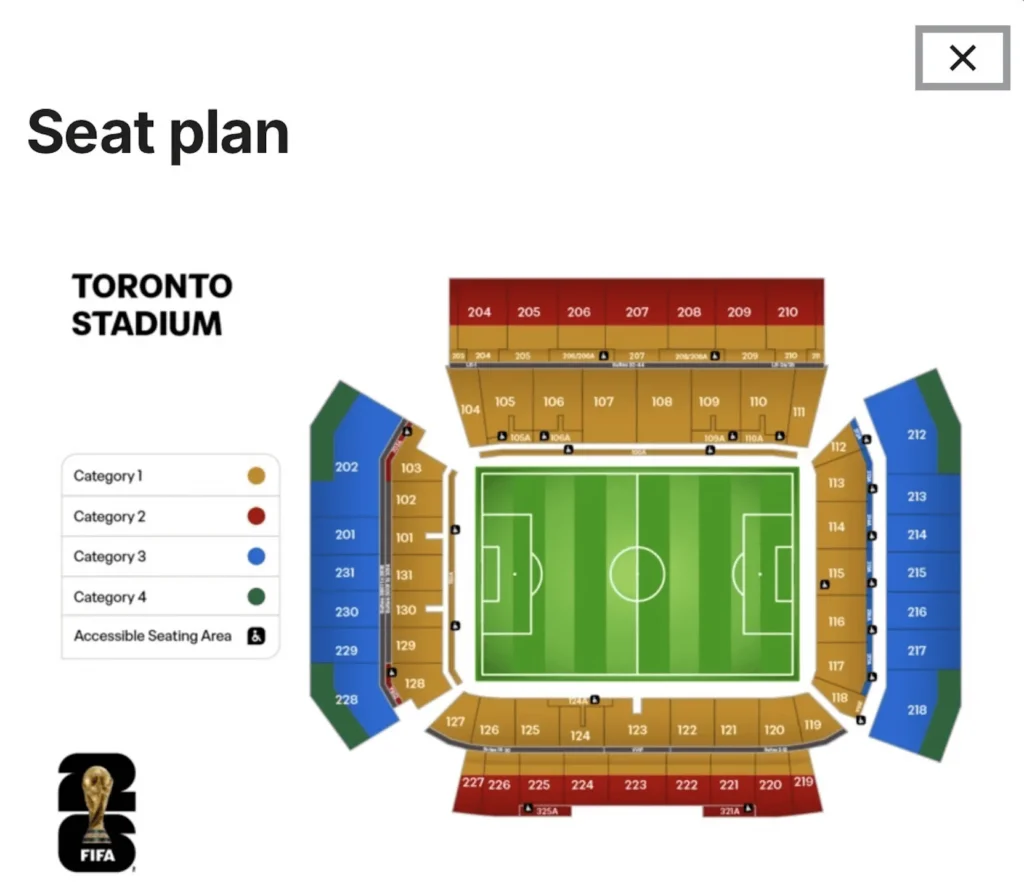
Vancouver — BC Place
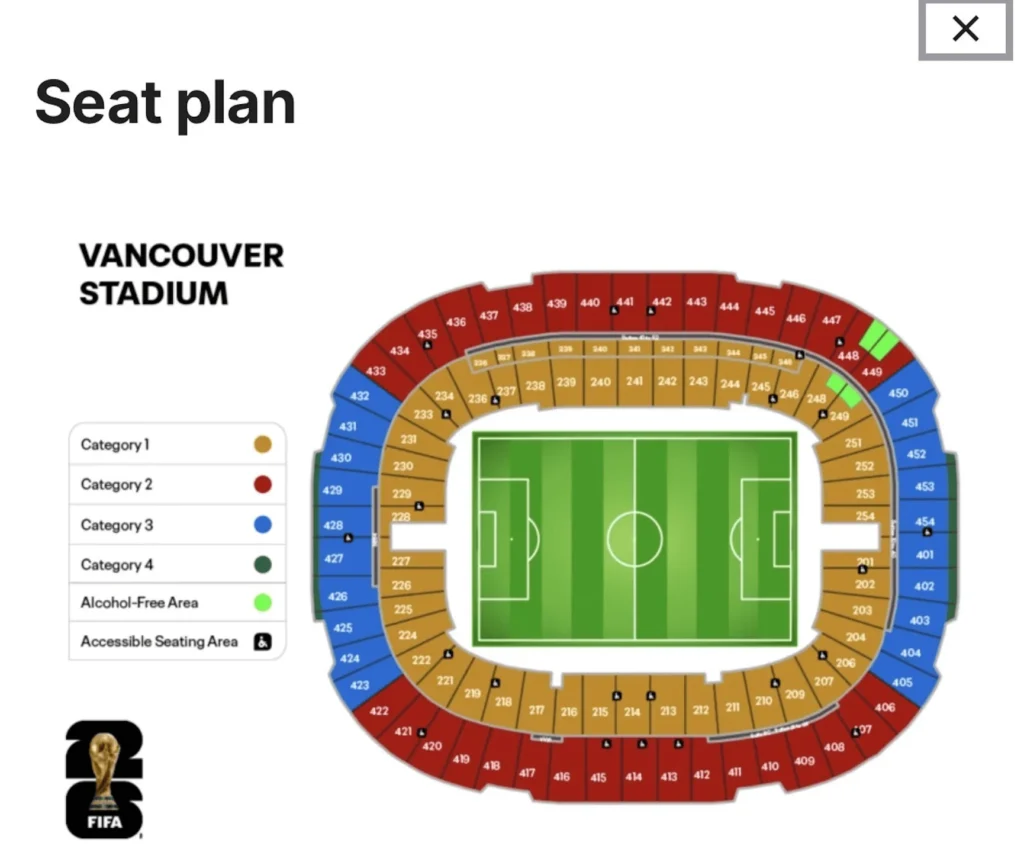
Mexico host cities Stadium with Seat Map
Guadalajara — Estadio Akron
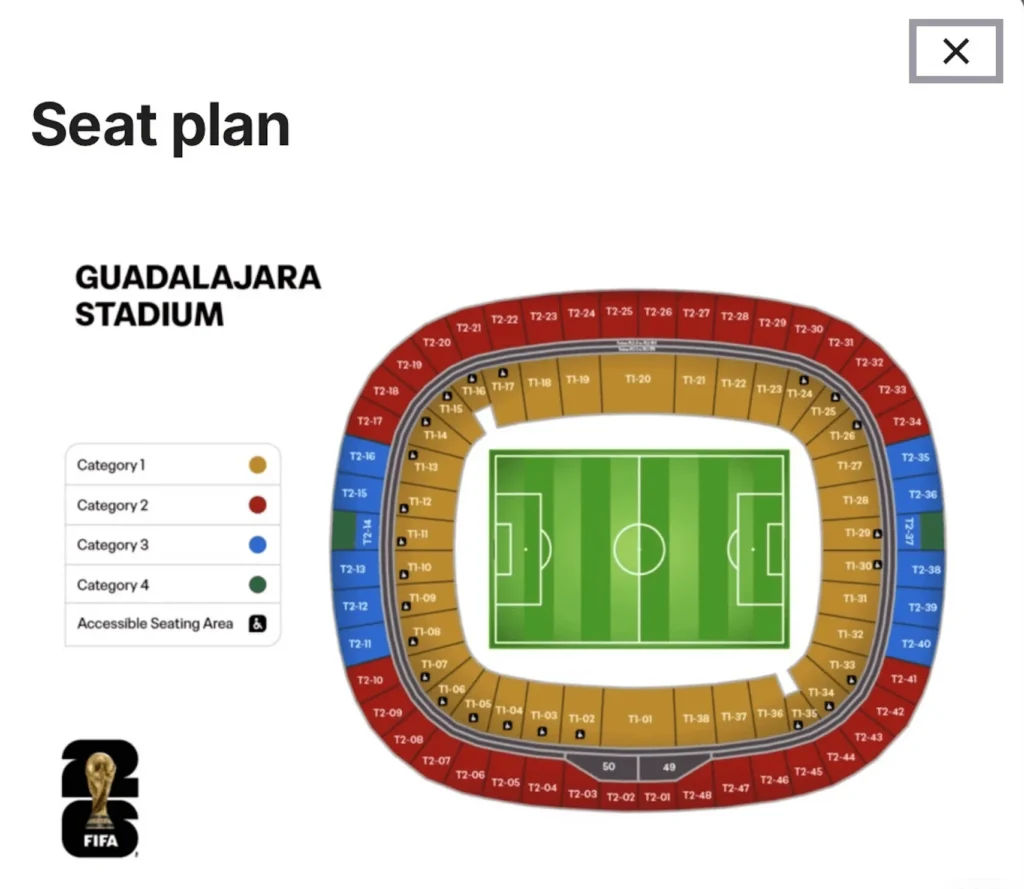
Mexico City — Estadio Azteca
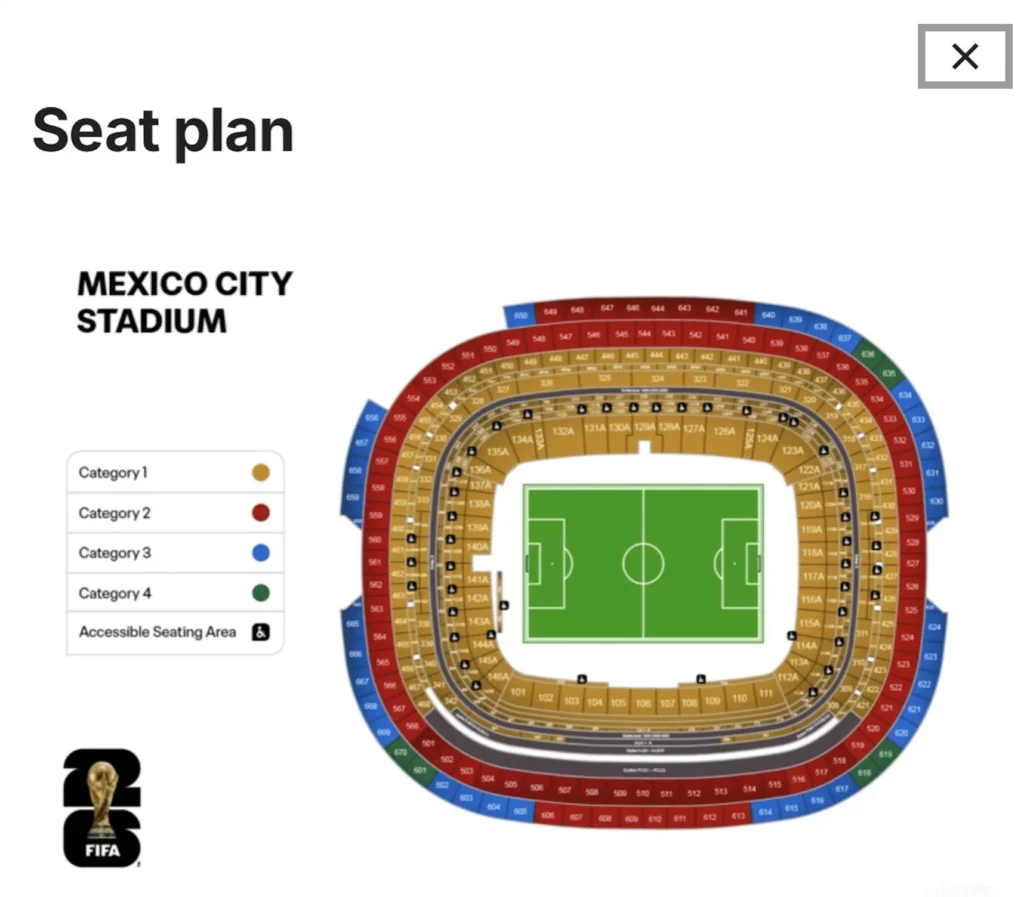
Monterrey — Estadio BBVA
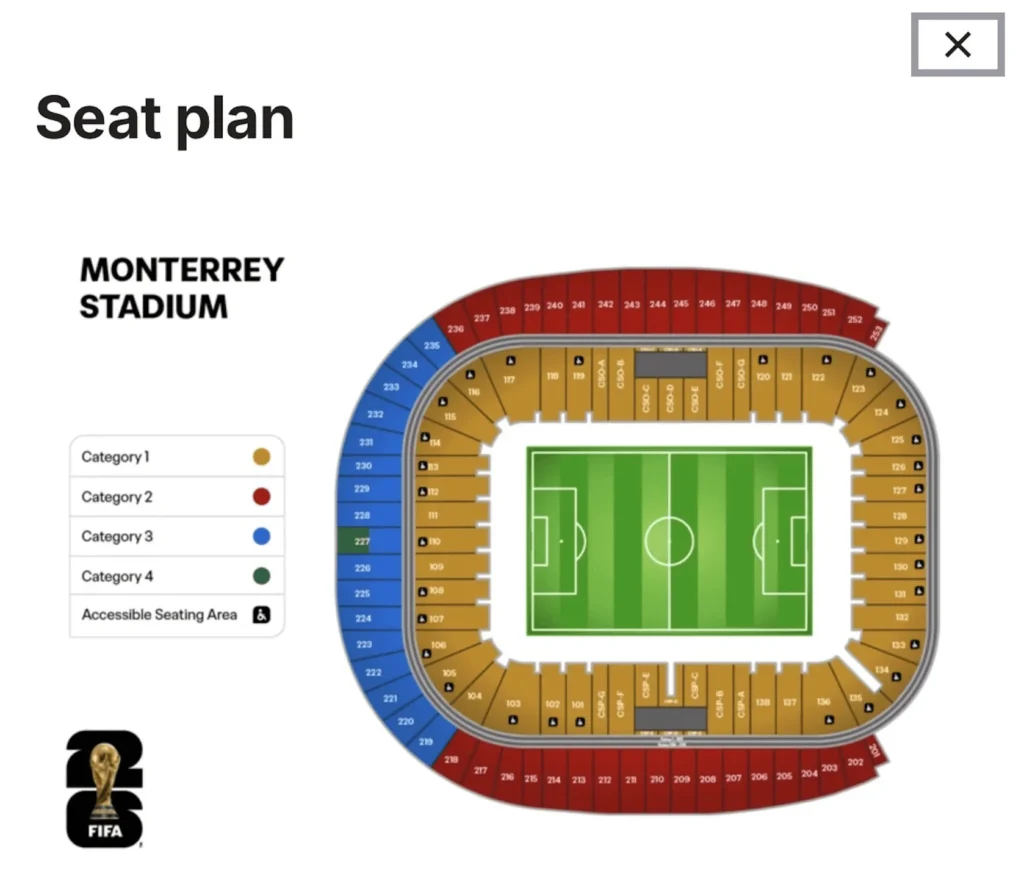
Category picks by fan goal
You do not need the best seat. You need the best seat for your plan, budget, and the match you care about.
If you want the best overall match view
Start with Category 1 on the central sideline in the lower tier. It is typically the most balanced view for seeing both boxes and reading the entire pitch without turning constantly.
If you want the best value
Look at Category 2 on the sideline, especially upper sideline areas between the boxes. This often gives you strong shape and clarity without the very top price.
If you want atmosphere and goal moments
Category 3 behind the goals can be loud and energetic. You give up midfield detail, but you gain a strong end-zone vibe that many traveling fans love.
If you are buying for a group
Category 3 can be easier for finding seats together during high demand. Lower tiers can split your group across sections quickly, especially in popular fixtures.
FAQs
They usually show the seating chart for a specific match and venue, with zones labeled by ticket category. You pick a category area, and exact seat details are often assigned later.
The category concept is consistent, but the exact sections included in each category can vary by stadium layout. Always compare zones on that match’s map, not just the category label.
In early sales phases, you typically apply or buy by category and cannot pick an exact seat right away. Seat allocation is handled later, and you receive the final details closer to matchday.
Choose sideline zones when possible, zoom out to confirm your angle, and read every restricted-view note during checkout. If a seat warning appears, treat it seriously and switch zones.
Accessibility tickets are offered in dedicated sections designed for wheelchair users and companion seating, with planned routes and entry paths. These areas are separate from standard category blocks.
Conclusion
World Cup 2026 seat maps are not just diagrams. They are your decision tool for matching budget, angle, and atmosphere to the right ticket category. Pick your goal, shortlist two categories, and prioritize central sideline views to avoid regret. If you do that, the seating chart becomes simple, even when the stadium layout changes by city.