SoFi Stadium World Cup 2026, Match Schedule, Capacity, Facts, LA Travel Tips
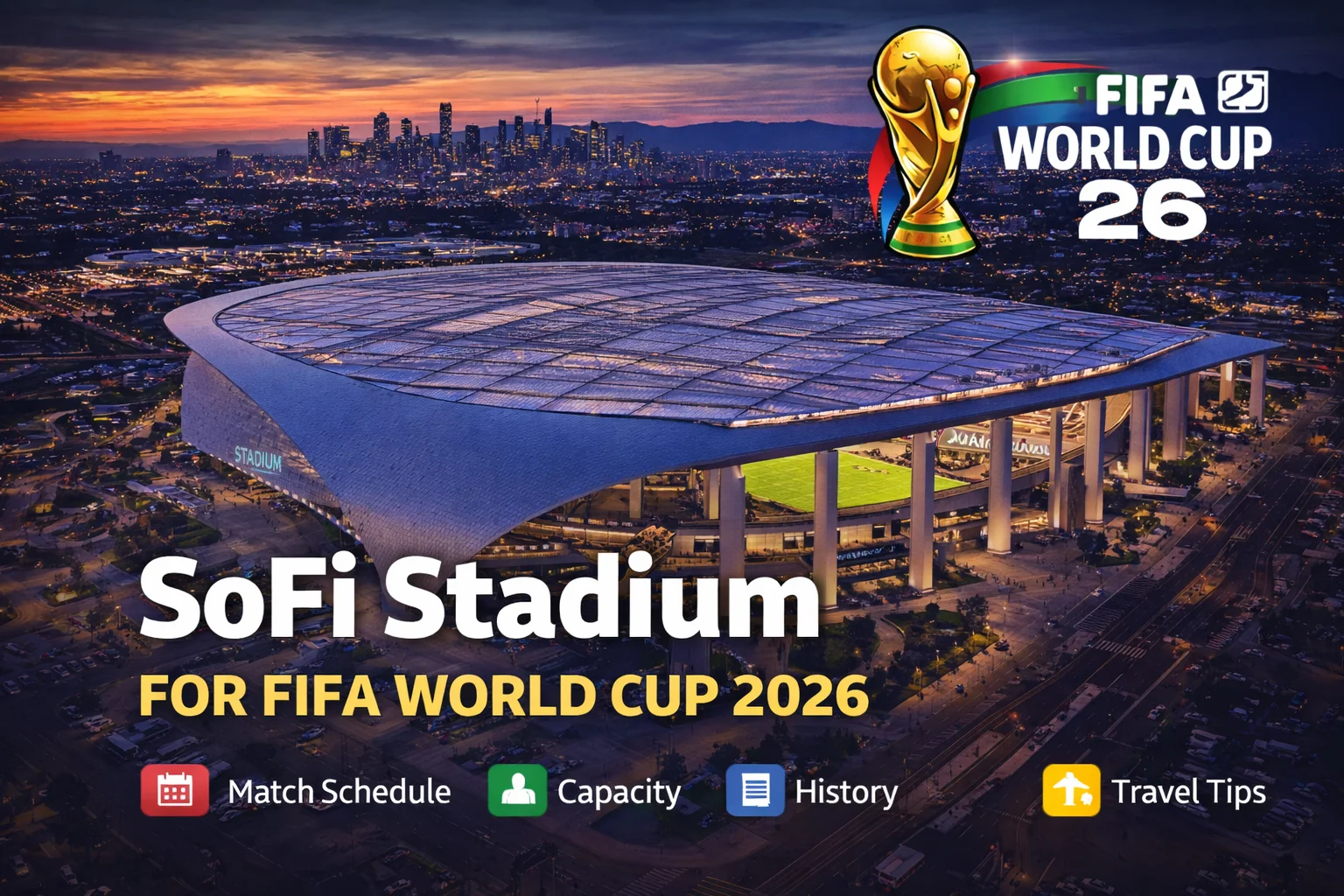
SoFi Stadium World Cup 2026 is set to be one of the biggest tournament experiences in Southern California. The stadium sits in Inglewood, in the Los Angeles area, and it will welcome fans from every corner of the world. The 2026 FIFA World Cup expands to 48 teams across three nations, match weeks will feel busier than ever. That is why planning early can make your trip smoother, calmer, and more fun.
During the tournament, SoFi Stadium will be referred to as Los Angeles Stadium in FIFA scheduling. This neutral naming approach keeps branding consistent for the event. Even so, the matchday energy will still feel like classic Los Angeles, with massive crowds, global languages, and a citywide football vibe that builds as kickoff gets closer.
Los Angeles is scheduled to host eight matches at this venue, including group-stage games and knockout rounds. Demand will stay high from mid-June into July. If you want the full World Cup feeling in one place, SoFi Stadium is designed for that kind of moment.
Why SoFi Stadium is a headline FIFA 2026 venue
SoFi Stadium stands out because it blends world-class design with the reality of hosting huge crowds. It was built for major events, and it quickly became a go-to venue for high-demand sports and entertainment. That experience matters in a World Cup, because everything depends on timing, flow, and clear operations on matchday.
Another reason the stadium fits FIFA 2026 is its ability to shift from an NFL setup into a football-ready environment. World Cup hosting requires specific standards, so the venue’s tournament role includes key modifications and operational updates. When you combine that with Los Angeles being a global travel destination, the result is a match trip that feels like a full vacation.
SoFi Stadium capacity, seating, and fan experience
SoFi Stadium lists an approximate base capacity of about 70,000, and it can expand up to 100,000 for very large events. For World Cup matches, the commonly shared figure is 70,000, which supports a loud atmosphere while still feeling modern and comfortable.
Premium seating is a major part of the experience here. The venue includes hundreds of suites and thousands of club-style seats, which shapes the feel of concourses, lounges, and pre-match movement. At the same time, the stadium is built for general fans too, so upper levels still aim for strong sightlines and a connected feeling to the pitch.
| Detail | What to know for 2026 |
|---|---|
| Location | Inglewood, in the Los Angeles area |
| Seating capacity | About 70,000, expandable up to 100,000 |
| Tournament label | Los Angeles Stadium during FIFA scheduling |
| Matches hosted | Eight matches, including group and knockout rounds |
What the Seat Map for FIFA World Cup
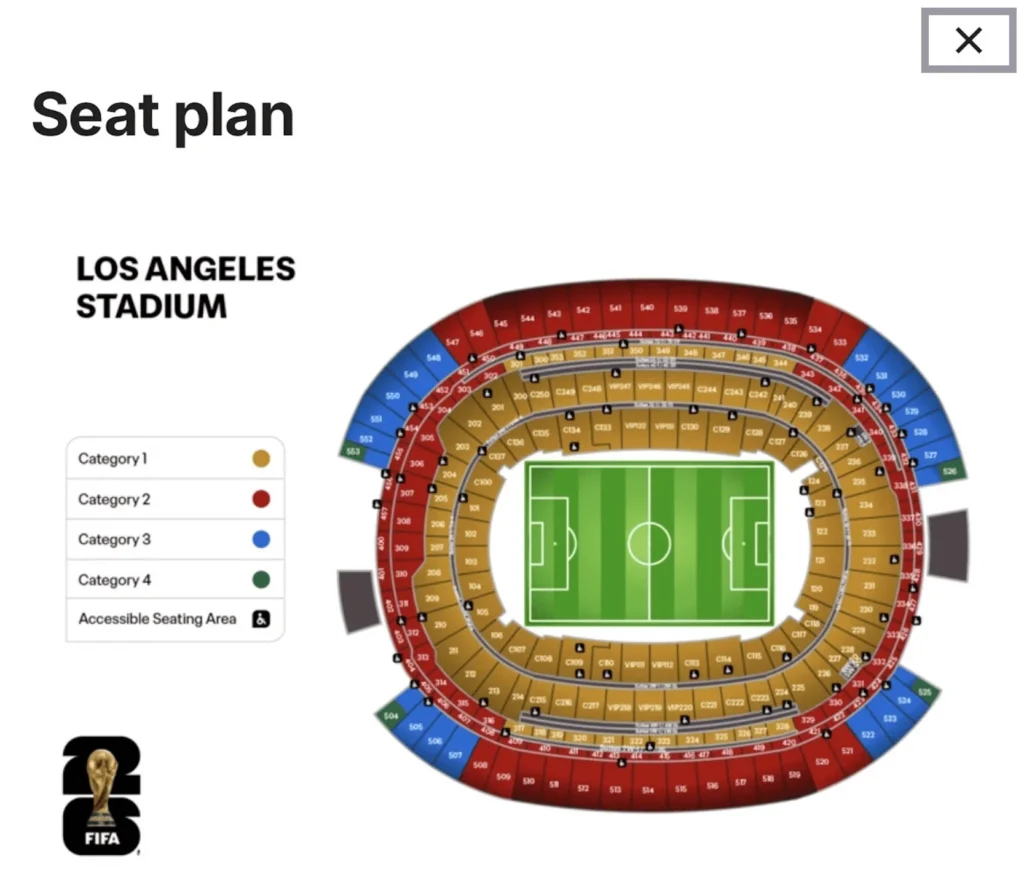
SoFi Stadium is often described as an indoor-outdoor style venue. The translucent roof changes the light and feel across sections, while open sides help with airflow. This combination can make the match environment feel different depending on where you sit, especially for midday kickoffs.
Because soccer configurations can affect how the pitch view feels, it helps to check seat maps when ticketing opens. Also, if you are sensitive to heat or bright sun, think about how midday match times might affect your section choice.
Accessibility and comfort planning
The stadium includes accessibility features like ramps and elevators, which supports a more inclusive experience. Still, peak crowds can create pinch points near gates and ramps. To reduce stress, arrive earlier than you think you need, and carry fewer items through security.
Key features that feel futuristic
SoFi Stadium is packed with design choices that make it feel like a next-generation venue. One standout feature is the translucent roof that allows natural light while providing protection from the elements. In addition, open sides improve airflow, which can make the environment feel fresher compared with fully enclosed stadiums.
Inside, the venue is famous for its massive video display system. The 70,000-square-foot video board is described as the largest in sports, and it supports replays, match information, and immersive viewing. Fans also talk about the infinity screen concept, which helps create a wraparound visual presence in the stadium bowl.
Advanced amenities at SoFi Stadium
- High-speed Wi-Fi throughout the venue keeps fans connected during games.
- Diverse food options range from local California flavors to international choices.
- Multiple entry points help reduce wait times and improve crowd flow.
Sustainability elements also show up in the stadium story. The venue has been described with features like solar panels, water conservation systems, and recycled water systems. Those choices align with modern expectations for large, global events.
SoFi Stadium History
SoFi Stadium opened on September 8, 2020, after years of planning and construction. Developed by Los Angeles Rams owner E. Stanley Kroenke, the project reshaped the Inglewood landscape and became a centerpiece of the Hollywood Park redevelopment area. The stadium site is connected to the former Hollywood Park Racetrack location, which adds a sense of old-and-new heritage in the venue’s story.
The project cost has been widely described as an estimated 5.5 billion dollars, making it a landmark build in modern stadium history. Soon after opening, the venue became home to the NFL’s Rams and Chargers. At the same time, it was designed as a flexible entertainment hub, so concerts and large-scale events became part of its identity.
The venue also built credibility by hosting major moments quickly. In 2022, it hosted the Super Bowl, which showed it can handle global attention and massive operational demand. By 2023, major concerts and high-profile events continued to grow its international profile. It has also hosted college football and other globally watched spectacles.
Milestones in the SoFi Stadium timeline
- 2016: Groundbreaking ceremony marks the official start of construction.
- 2020: Opening period includes major events under early operating conditions.
- 2022: Super Bowl hosted, confirming mega-event readiness.
- 2023: Major concerts by global artists boost its international profile.
Beyond 2026, the venue has been mentioned in connection with future high-profile events too, including another Super Bowl and Olympic-related ceremonies. That long runway reinforces why it is considered a true global-stage stadium.
Interesting facts fans love about SoFi Stadium
SoFi Stadium has several details that visitors love sharing, especially during big tournaments. Its construction has been described as involving over 15 million worker hours, which shows the scale behind what you see on matchday. The stadium’s video board size also stands out as a headline statistic, because it shapes the experience from nearly every seat.
The stadium design also includes earthquake-resistant technology, which is a meaningful part of building in California. In addition, the venue incorporates art installations from local creators, adding cultural character beyond the sports focus.
| Fact category | Detail |
|---|---|
| Construction cost | 5.5 billion dollars, described as the highest ever for a stadium |
| Video board size | 70,000 square feet, double-sided oval shape |
| Sustainability | Solar panels and recycled water systems described in venue features |
| Event variety | NFL games, concerts, and now World Cup matches |
SoFi Stadium World Cup 2026 schedule
SoFi Stadium is scheduled to host eight World Cup matches, moving from group stage action into knockout rounds and a quarterfinal. Early schedules often include placeholders such as “playoff winner,” because not every team is known until qualifiers and final draws are complete. That is normal for a World Cup of this size.
The match list below reflects the published structure that has been shared for Los Angeles Stadium scheduling, including match dates, stages, and early matchup labels.
| Match date | Local kickoff time (PT) | Stage | Teams shown in early schedule labels |
|---|---|---|---|
| June 12, 2026 | 6:00 PM | Group stage | United States vs Paraguay |
| June 15, 2026 | 6:00 PM | Group stage | Iran vs New Zealand |
| June 18, 2026 | 12:00 PM | Group stage | Switzerland vs UEFA playoff winner |
| June 21, 2026 | 12:00 PM | Group stage | Belgium vs Iran |
| June 25, 2026 | 7:00 PM | Group stage | UEFA playoff winner vs United States |
| Late June 2026 | 12:00 PM | Round of 32 | Knockout matchup listed for Los Angeles |
| Early July 2026 | 12:00 PM | Round of 32 | Knockout matchup listed for Los Angeles |
| July 10, 2026 | 12:00 PM | Quarterfinal | Quarterfinal matchup based on prior results |
How to interpret “playoff team” placeholders
Some matchups include playoff winners because the full field is not locked far in advance. As qualification and draws finalize, those labels become real team names. If you are planning travel around a specific team, build flexibility into your booking choices so you can adjust without stress.
Travel tips for SoFi Stadium on match week
Los Angeles can feel easy or exhausting, depending on how you plan. SoFi Stadium is close to Los Angeles International Airport (LAX), which helps, but traffic and timing still shape your whole day. The simplest strategy is to pick your transport method early, then build a backup option in case crowds shift.
Airports and arrival planning
Most international travelers will use LAX, and it is only minutes away by car, yet it can still be slow at peak hours. If you arrive on matchday, leave a large time buffer for baggage, traffic, and check-in. If you can arrive a day early, you will feel more relaxed and flexible.
Public transit, shuttles, and local tools
Public transportation options include Metro lines that connect toward stadium access routes. LA Metro guidance has been described with bus options and a free SoFi Stadium shuttle, including a boarding point tied to the LAX/Metro Transit Center. Many fans also rely on rideshare as a flexible option, especially when traveling in small groups.
If you plan to use transit, tools like real-time schedule apps help you avoid guesswork. Also, because peak crowds can change quickly, aim to travel earlier rather than later.
Driving, parking, and smart timing
Driving can work, but it can add stress on big matchdays. If you drive, arriving early is the key, and leaving patiently matters just as much. Some fans prefer parking farther out and walking, because it can make exits more predictable after the final whistle.
For rideshare, using designated pickup and drop-off zones can reduce confusion. Still, it helps to choose a meetup point away from the busiest gate corridors.
Where to stay for a smoother match week
For convenience, many visitors consider Inglewood first because it keeps you close. Other areas mentioned as practical options include El Segundo and Culver City. If you want a more tourist-centered base, places like Downtown Los Angeles, West Hollywood, Santa Monica, Marina Del Rey, and Venice Beach can work, as long as you plan travel time to the stadium.
Because schedules and personal plans can change, check cancellation rules before you book. That flexibility can protect your budget if you decide to chase different matchups later.
Fan energy beyond the stadium
A World Cup trip is more than ninety minutes of football. Plans described for Los Angeles include a broader city fan program during the match window. A major fan festival has been described at LA Memorial Coliseum from June 11 to 15, featuring broadcasts, food, and entertainment. Another fan-festival concept has been described as likely centered around Exposition Park near downtown, creating a shared space for fans without match tickets.
What to pack and how to prepare for matchday
A matchday routine reduces stress. Keep your kit light, practical, and ready for security screening. Midday kickoffs, walking distances, and long entry lines can drain energy faster than you expect, so small preparations make a big difference.
Matchday checklist
| Item | Why it matters |
|---|---|
| Digital tickets and ID | Helps avoid delays at entry gates |
| Portable charger | Navigation, photos, and messaging drain batteries fast |
| Light layer | Coastal evenings can feel cooler than expected |
| Comfortable shoes | Walking and standing add up around big venues |
| Simple essentials | Fewer items means faster security screening |
Heat and midday kickoff awareness
Some matches are listed at 12:00 PT, so plan for sun and warmth. Hydration and pacing matter, especially if you want to enjoy pre-match fan zones. Arriving early also helps you move calmly instead of rushing in heat.
Tickets, timing, and realistic expectations
World Cup demand is always intense, and Los Angeles is a premium destination. The most reliable approach is to follow official ticket phases and avoid risky informal resale choices. Hospitality packages are also part of the ticket landscape, and they can change the viewing experience if your budget allows.
For matchday timing, a practical rule is to arrive two to three hours early, especially for United States games and knockout rounds. Crowds, security checks, and local traffic can stack quickly, and a time buffer protects your experience.
FAQs
The venue is scheduled to host eight matches, including group-stage games and knockout rounds up to a quarterfinal.
SoFi Stadium is commonly listed at about 70,000 seats for this setting, with the stadium also described as expandable up to 100,000.
The first listed match is on June 12, 2026, with a 6:00 PM kickoff time in Pacific Time.
Yes. It is referred to as Los Angeles Stadium during FIFA scheduling to follow neutral naming rules.
The fastest option is often a short drive or rideshare, while transit plans also include Metro-connected routes and shuttle options described for stadium access.