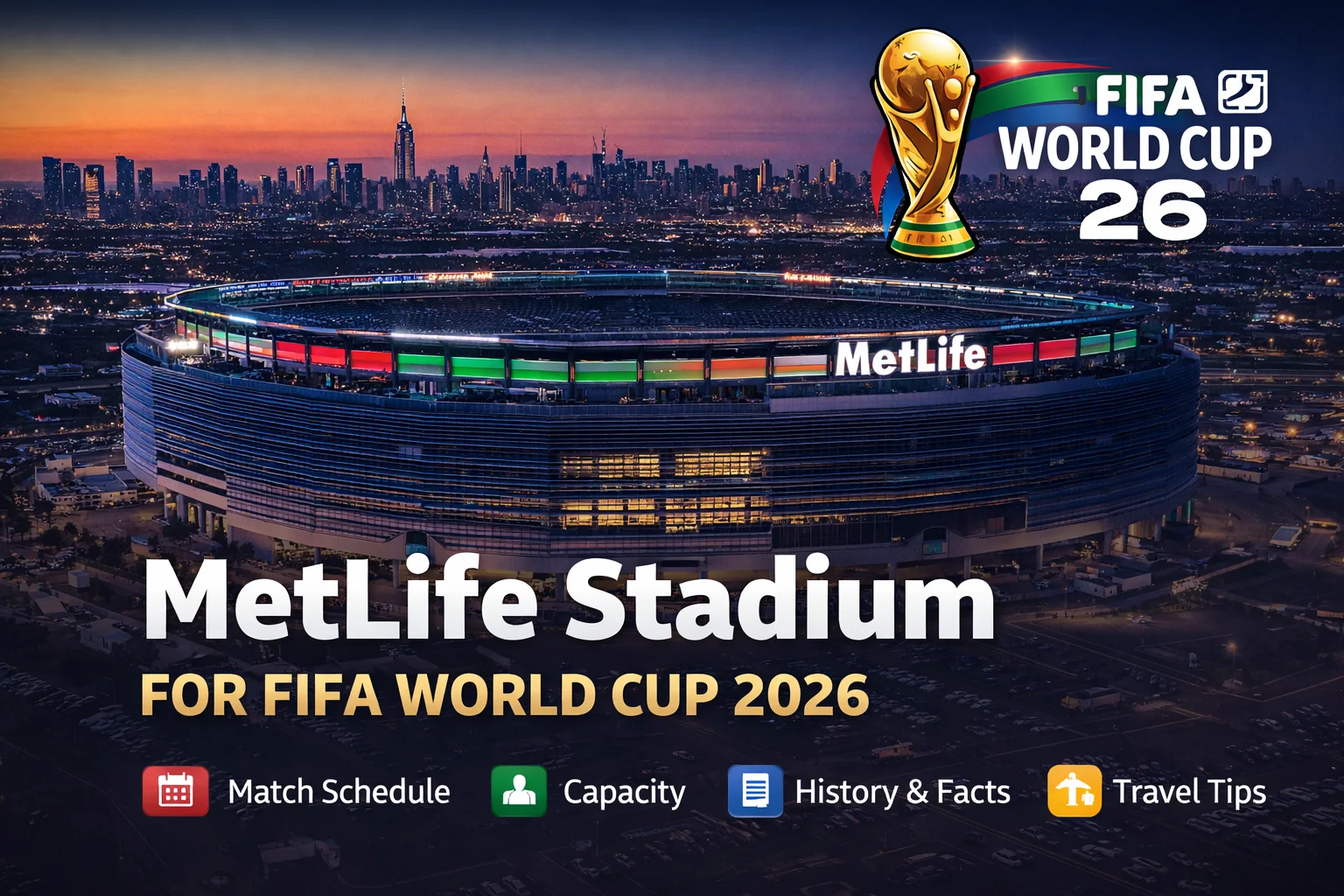
MetLife Stadium for FIFA 2026, Match Schedule, Capacity, History, Facts, Travel Tips
As excitement builds for the FIFA World Cup 2026, fans around the world are turning their attention to MetLife Stadium. This New York–New Jersey host site is set to welcome some of the tournament’s biggest moments and loudest atmospheres. Because the event is hosted across Canada, Mexico, and the United States, each venue carries its own energy and story. Still, MetLife Stadium stands out as one of the most important stages of the entire competition.
If you want the MetLife Stadium 2026 World Cup experience, you are aiming for matches that will feel historic from the first whistle. The stadium will host eight matches in total, which is a major share of the tournament schedule. Even more importantly, MetLife Stadium will host the championship match, making it the center of global attention late in the tournament.
During the competition, you will also see the venue referenced as New York/New Jersey Stadium in official tournament materials. This is part of FIFA’s naming approach during major events, and it affects how the stadium appears on tickets and schedules. Therefore, it is helpful to recognize both names early so you do not get confused while planning.
This guide brings together the confirmed match schedule, capacity details, venue history, standout facts, and practical travel planning. It is written for fans who want clear information, smooth planning, and a confident matchday experience. At the same time, it keeps the focus on what matters most: enjoying the football and the atmosphere.
FIFA World Cup 2026 overview at MetLife Stadium
The 2026 tournament marks a major milestone for North American hosting, with sixteen venues chosen across three countries. Within that lineup, MetLife Stadium holds a special role because of its scale, location, and event history. Its position near major urban centers attracts international visitors who want access to a world-famous city region. Consequently, many fans will treat MetLife matches as both a football event and a travel highlight.
MetLife Stadium will host eight fixtures five group-stage matches, one Round of 32 match, one Round of 16 match, and the final. That mix creates a complete story arc, moving from early-stage variety to high-pressure knockout drama. Because of that structure, the stadium is expected to feel different at each stage of the tournament.
Group-stage matches tend to be colorful and energetic, with a blend of team supporters and neutral fans. In contrast, the knockout rounds bring higher stakes and more intense focus. Finally, the championship match becomes a global occasion, with demand surging and security becoming tighter. Therefore, planning your trip around the match stage is just as important as planning around the date.
MetLife Stadium FIFA 2026 match schedule
The MetLife Stadium 2026 World Cup schedule includes a strong mix of teams and kickoff times across June and July. All times listed below are in Eastern Time, and they reflect the confirmed venue fixture listing. Because the final is part of the stadium’s schedule, the late-tournament travel period becomes especially important for booking and logistics.
Confirmed match list at MetLife Stadium
| Date | Time (ET) | Match | Stage |
|---|---|---|---|
| June 13, 2026 | 6:00 PM | Brazil vs Morocco | Group C |
| June 16, 2026 | 3:00 PM | France vs Senegal | Group I |
| June 22, 2026 | 8:00 PM | Norway vs Senegal | Group I |
| June 25, 2026 | 4:00 PM | Ecuador vs Germany | Group E |
| June 27, 2026 | 5:00 PM | Panama vs England | Group L |
| June 30, 2026 | 5:00 PM | Round of 32 | Knockout |
| July 5, 2026 | 4:00 PM | Round of 16 | Knockout |
| July 19, 2026 | 3:00 PM | Final | Championship |
What these dates mean for travelers
If you want a festive atmosphere with a broad mix of fans, the group-stage fixtures can be a perfect choice. Weekend group matches often bring packed stands, vibrant colors, and nonstop noise. Also, group-stage crowds often include many neutral fans who just want to experience the World Cup energy in person.
If you prefer the highest tension and the biggest stakes, the knockout matches are the ones to target. The Round of 16 and final usually bring heavier security and stricter matchday routines. In addition, travel demand typically rises as the tournament approaches its final week. Because of that, prices for accommodation and transport may climb fastest around July 19, 2026.
Seating capacity and what the stadium feels like on matchday
MetLife Stadium is known for its massive scale, and that size changes the matchday experience. For football and soccer events, the stadium lists a capacity of 82,500 seats, which places it among the largest venues in professional sports. That capacity also shapes how long entry lines can be, how busy concourses feel, and how early you should arrive.
The venue is large, you should also think about your walking distance on matchday. The stadium footprint is huge, so moving between gates, seating areas, and concession zones can take time. Therefore, it helps to arrive with a plan rather than relying on improvisation.
Seating layout and viewing experience
MetLife Stadium includes multiple seating tiers, which supports strong sightlines across the bowl. Lower seating areas can offer a close view of the pitch, which many fans prefer for player detail and match intensity. Meanwhile, upper levels provide a panoramic view that can make team shape and tactical movement easier to read. As a result, different sections can fit different types of fans, even though the match atmosphere remains strong everywhere.
The stadium also includes 10,005 club seats and more than 200 luxury suites, which adds premium viewing options for those who want added comfort. In addition, the venue features modern amenities like high-definition screens that help fans follow replays and key moments. These details matter, especially in a stadium of this size, where you want to stay connected to the match even during busy moments.
Open-air energy and crowd sound
MetLife Stadium is an open-air venue, and that affects how sound moves around the bowl. Because it is not a dome, crowd noise does not “trap” in the same way it might indoors. Still, for big matches, chants and songs carry strongly, especially in dense supporter areas and behind the goals. Therefore, even without a roof, the atmosphere can still feel intense when two fanbases arrive in full voice.
Concert configuration note
While this guide focuses on FIFA 2026, it is also worth knowing that capacity changes for some events. During concerts, the venue can adjust to around 50,000 to fit staging needs. That detail highlights the stadium’s flexibility, although World Cup matchdays will focus on the full football setup.
Stadium features, accessibility, and event-focused upgrades
MetLife Stadium is built to handle huge crowds, and that means visitor comfort and accessibility remain central. Wheelchair-accessible areas exist across all tiers, which helps fans choose seats based on viewing preference rather than access limitations. Additionally, sensory rooms support fans who need a quieter environment during high-stimulation events. These features are important during major tournaments, because matchday crowds can be intense from arrival to exit.
The MetLife Stadium 2026 World Cup approaches, the venue is also aligned with international tournament standards. Preparations include areas such as media zones and enhanced security planning. While fans may not see every behind-the-scenes change, these updates support smooth operations during the busiest fixtures, including the final.
Seating-related changes connected to FIFA needs
The stadium’s preparation includes changes designed to support the field layout and tournament requirements. Work included removing permanent lower-bowl corner seats and replacing them with modular systems. The goal is to maintain the stadium’s overall capacity while also supporting the pitch configuration used for FIFA matches. This type of adjustment matters because it connects the stadium’s NFL design to the needs of global football.
Matchday policy basics to know
Security and entry rules shape your matchday experience, so planning around them reduces stress. The stadium uses bag restrictions and metal detectors, and clear bags no larger than 12x6x12 inches are permitted. In addition, prohibited items include umbrellas and large cameras. Cashless payments also help speed up transactions, which matters when crowds are heavy at concessions and merchandise points. Therefore, packing smart can save you time and frustration.
The history of MetLife Stadium in one clear timeline
Understanding the stadium’s background adds meaning to the matches played there. Construction began in 2007, signaling a new era for major sports events in the region. The venue opened in 2010, replacing the older Giants Stadium and creating a modern home for top-level events. Early on, it was known as New Meadowlands Stadium, before naming rights began in 2011 through an insurance partnership that runs through 2036.
MetLife Stadium is also famous for its unique NFL arrangement, because it is home to two teams. The New York Giants and the New York Jets share the stadium, creating a rare joint-tenancy setup. This arrangement required practical planning and design flexibility, and it shaped how the venue operates for major events. Because the stadium hosts different teams, it developed a strong reputation for handling high attendance and large-scale logistics.
Milestone events hosted at MetLife Stadium
MetLife Stadium has hosted a wide range of major events that built its global profile. In 2014, it hosted Super Bowl XLVIII, which became known for near-freezing conditions. In addition, WrestleMania events in 2013 and 2019 set major attendance records, proving the stadium’s scale for huge spectacles.
The venue has also hosted major concerts, with global stars filling seats and creating stadium-wide moments. That variety shows the venue’s flexibility, which becomes especially relevant for a tournament as large as the World Cup. Beyond these events, MetLife has hosted high-profile soccer fixtures, including finals and international matchups that previewed its World Cup potential. This history helps explain why the stadium was selected for the tournament’s biggest match.
Facts that make MetLife Stadium stand out
MetLife Stadium has details that fans often remember long after the match ends. These facts also help first-time visitors understand what makes the venue unique in both design and atmosphere. Because major tournaments bring global visitors, these small details become part of the story fans share online and with friends.
Visual design and exterior identity
One of the most recognizable features is the exterior lighting and panel system that changes color based on the home team. Blue is used for Giants games, while green is used for Jets matches, creating a dynamic look from the outside. This changing exterior makes the stadium feel alive even before fans enter, and it becomes a popular photo backdrop on event days.
The venue is also enormous in physical size, spanning 2.1 million square feet. Its construction cost reached $1.6 billion, reflecting the scale of investment required for such a modern multi-purpose stadium. These numbers help explain why it can host events of massive global size and still support crowd movement and stadium operations.
Premium seating and club experience highlights
MetLife Stadium includes over 200 luxury suites, which support premium matchday experiences. In addition, it features 10,005 club seats, offering enhanced viewing and amenities. The EY Coaches Club adds another unique element, including an on-field deck near the benches. While many fans focus on standard seating, these premium zones are part of what makes the stadium capable of hosting elite global events.
Other notable features fans often mention
- Artificial turf supports consistent play in many events, regardless of weather conditions.
- Parking lots can accommodate 28,000 vehicles on event days.
- Sustainability efforts include LED lighting and recycling programs.
- The stadium has hosted memorable cold-weather moments, including the Super Bowl in 2014.
These details create a fuller picture of the venue beyond the pitch itself. They also show why the stadium is treated as a modern, high-capacity hub for major sports and entertainment.
Travel tips for visiting MetLife Stadium
Matchday logistics can make or break the experience, especially during a tournament as large as FIFA 2026. MetLife Stadium is located in East Rutherford, New Jersey, and it is accessible from nearby cities and transport hubs. Because the region is busy even on normal days, planning your route carefully is one of the smartest moves you can make.
Public transit is a reliable choice for many fans, particularly when traffic increases around kickoff times. At the same time, driving can work if you plan early and prepare for congestion. The key is to choose your approach based on your match, your group, and how much flexibility you want.
Public transportation options from New York City
From New York City, NJ Transit trains depart Penn Station and connect through Secaucus Junction, where you can transfer to Meadowlands service. Under normal conditions, this route can take about 30 minutes once the connections line up well. However, during major events, the overall journey can feel longer due to crowds and waiting times, and some fans plan for 60 to 90 minutes. Therefore, it helps to build a buffer into your schedule, especially for knockout fixtures.
Buses from Port Authority Terminal offer another affordable route option for many visitors. Fares can range from about $7 to $23 round trip, which is helpful for budget planning. If you prefer fewer transfers, a direct bus plan can feel simpler, especially if you are traveling with a group.
Driving and parking advice
If you decide to drive, major highways like I-95 or Route 3 help you reach the stadium area. However, traffic peaks during big events, so arriving early can reduce stress and improve your overall day. Parking passes are essential, and prices are often around $40, so you should plan that into your budget. Lots open hours before kickoff, which also supports tailgating and early arrival routines.
Rideshare services such as Uber use designated drop-off zones, which can be convenient. Still, congestion and post-match demand can make rideshare less predictable. Because of that, carpooling can be a smart alternative, reducing both costs and road congestion.
Tailgating basics
Tailgating is allowed in designated parking lots, but you need a valid parking pass and must follow stadium guidelines. For many fans, tailgating becomes part of the matchday ritual, especially for group-stage weekends. Still, it works best when you plan your timing carefully and stay aware of entry rules. That way, you can enjoy the pre-match atmosphere without helping your own schedule slip.
Where to stay for World Cup matches at MetLife Stadium
Accommodation choice shapes your travel rhythm, your budget, and your matchday stress level. Many visitors choose between staying in New Jersey for shorter travel or staying in Manhattan for the full city experience. Both choices can work well, as long as you plan around transportation and match timing.
Stay nearby in New Jersey for easier match logistics
Best Hotels Near MetLife Stadium, are in Secaucus or East Rutherford can offer a practical approach, especially if your priority is stadium access. Some options provide shuttle services, which can reduce transport planning and simplify matchday routines. This approach is often attractive for fans who want to focus on football first and sightseeing second.
Stay in Manhattan for the full trip experience
For fans who want the energy of New York City alongside the World Cup, Manhattan is a common base. It offers broader sightseeing and nightlife, and it connects to transit routes that reach the stadium. The tradeoff is that room rates can be higher, and matchday travel needs more timing discipline. Still, for many visitors, the city experience is part of the reason they travel for the tournament.
Local attractions that fit around match plans
If you have extra time, the American Dream mall is a nearby option for shopping and entertainment. Meadowlands Racetrack offers another local activity for visitors who want something beyond the stadium. These attractions can help fill the hours between matches, especially if you are attending multiple fixtures.
Game-day planning tips that reduce stress
During the FIFA World Cup, matchday routines become more intense because the crowds are bigger and the stakes are higher. Therefore, small planning decisions can have a huge impact on your comfort and timing. The goal is simple: arrive prepared, move smoothly, and keep your focus on the football.
Arrive with a real timing plan
Because MetLife Stadium is large, entry lines and security screening can take time. For group-stage matches, many fans aim to be in the venue area at least two hours early. For knockout matches and especially the final, some fans choose three hours early, because crowd volume and security routines can be heavier. This approach also gives you time to find your gate, locate your seat, and settle in before kickoff.
Pack for summer weather swings
June and July can bring hot sun, humidity, and sudden rain in the region. Therefore, comfortable shoes matter, because walking distances inside and around the venue can be significant. Weather-appropriate gear also helps, especially if conditions shift quickly. Planning for hydration is also smart, because large summer crowds can make matchday feel more demanding than expected.
Know your post-match exit plan
Leaving a big match can feel chaotic if you do not plan ahead. If you are using rail, waiting 15 to 25 minutes after the final whistle can sometimes reduce stress and crowd pressure. If you are using a bus, confirming pickup zones before kickoff helps you avoid confusion after the match. These small choices keep the final moments of your day calm instead of frustrating.
Why MetLife Stadium fits a World Cup final
A World Cup final requires more than a strong stadium atmosphere. It also needs transport planning, security systems, and a region that can handle massive demand. The New York–New Jersey area has the scale to absorb global attention, and MetLife Stadium has the capacity to match the moment. Because the venue has already handled major events across sports and entertainment, it has built the operational experience needed for a tournament finale.
From the first group-stage kickoff to the final match on July 19, 2026, MetLife Stadium is positioned to deliver unforgettable scenes. Its size supports a huge crowd, its history adds prestige, and its modern features support comfort and smooth operations. Most importantly, the match schedule ensures that fans will experience both variety and peak drama at the same venue.
FAQs
It will host five group-stage matches, one Round of 32 match, one Round of 16 match, and the final on July 19, 2026.
The stadium lists a capacity of 82,500 seats for football and soccer events, making it one of the largest venues in the tournament.
Many fans use NJ Transit from Penn Station to Secaucus Junction, then transfer to Meadowlands service. Buses from Port Authority are another option.
In official tournament materials, it is referred to as New York/New Jersey Stadium, following FIFA’s naming approach during major competitions.
Tailgating is allowed in designated parking lots, but you need a valid parking pass and must follow stadium rules and guidelines.