

Lumen Field World Cup 2026, Seattle Stadium Schedule, Capacity, History, Travel Tips
As the excitement builds for the FIFA World Cup 2026, Seattle’s premier venue, often listed as Seattle Stadium during the tournament, stands ready to host thrilling football action. This iconic arena is known for its vibrant atmosphere, steep stands, and close sightlines that make matches feel intense. With preparations in full swing, including recent modifications designed to support top-level tournament operations, the event is set to deliver unforgettable moments for fans from all over the world.
In addition, the tournament expansion to 48 teams raises the stakes across every matchday. That is why planning early matters more than ever. From the latest Seattle fixture list and stadium capacity guidance to venue history, fascinating facts, and matchday travel tips, this complete guide combines everything you need in one place for Lumen Field World Cup 2026.
Seattle Stadium for FIFA 2026: Why Lumen Field Matters
Seattle is one of the official host cities, and Lumen Field is the centerpiece venue for World Cup football in the region. The stadium already has a strong football identity through Seattle Sounders FC matchdays and a proven ability to host major international events. As a result, the local match routine, crowd energy, and big-event readiness fit the World Cup environment naturally.
Another detail that matters for fans is FIFA naming rules. During the tournament, Lumen Field is expected to be referred to as Seattle Stadium in official materials. Therefore, you may see that name on tickets, maps, and schedules. Keeping this in mind can help you avoid confusion when you plan transport, find stadium gates, or search match information.
Because the 2026 tournament includes more teams and more matches overall, host cities will stay active for weeks. For that reason, booking flights, hotels, and local transport early can reduce stress and help you lock in better options.
Lumen Field World Cup 2026 Match Schedule in Seattle
Seattle’s Lumen Field World Cup 2026 slate features six fixtures that mix group stage energy with knockout-round drama. The schedule runs from mid-June to early July, giving fans time to build a trip around one match or several. Some team slots remain dependent on qualifiers, so a few listings include “TBD” style placeholders. However, the set of match dates and the overall match count form the core of the Seattle plan.
To give you a clear overview, here is a combined match table based on the details provided.
| Match Number | Date (2026) | Kickoff Time (PT) | Stage | Teams / Notes |
|---|---|---|---|---|
| 16 | June 15 | 12:00 PM | Group Stage (Group G) | Belgium vs Egypt |
| 32 | June 19 | 12:00 PM | Group Stage (Group D) | USA vs Australia |
| 52 | June 24 | 12:00 PM | Group Stage (Group B) | UEFA Playoff Winner A vs Qatar |
| 63 | June 26 | 8:00 PM | Group Stage (Group G) | Egypt vs IR Iran |
| 82 | July 1 | 1:00 PM | Round of 32 | Knockout match (teams determined later) |
| 94 | July 6 | 5:00 PM | Round of 16 | Knockout match (teams determined later) |
What the Seattle fixture list means for fans
Group stage matches often create the most diverse fan mix, because different nations arrive with big traveling support and the city feels like a football festival all day. Meanwhile, knockout matches can feel more dramatic, because every moment carries win-or-go-home pressure.
If you can, plan your trip around one group match and one knockout match. That combination often delivers the full tournament experience, because you get both the colorful early-stage energy and the intensity of the elimination rounds.
Smart matchweek planning tip
Try to arrive at least one day before your match. Jet lag, traffic, and longer entry lines can quickly turn matchday into a rush if you cut it close. Also, Seattle weather can shift from sunny to cool, so packing layers is a simple move that helps you stay comfortable from morning through evening.
Lumen Field Capacity and Seating for FIFA World Cup 2026
Lumen Field is known for its “close-to-the-action” feel, and its event setup is flexible enough to adapt to the World Cup. For the tournament, capacity is described around the high 68,000 to about 69,000 range, with a commonly cited figure of around 68,740 seats for large event configurations. During the World Cup, event seating layouts, security perimeters, and operational plans may affect final availability.
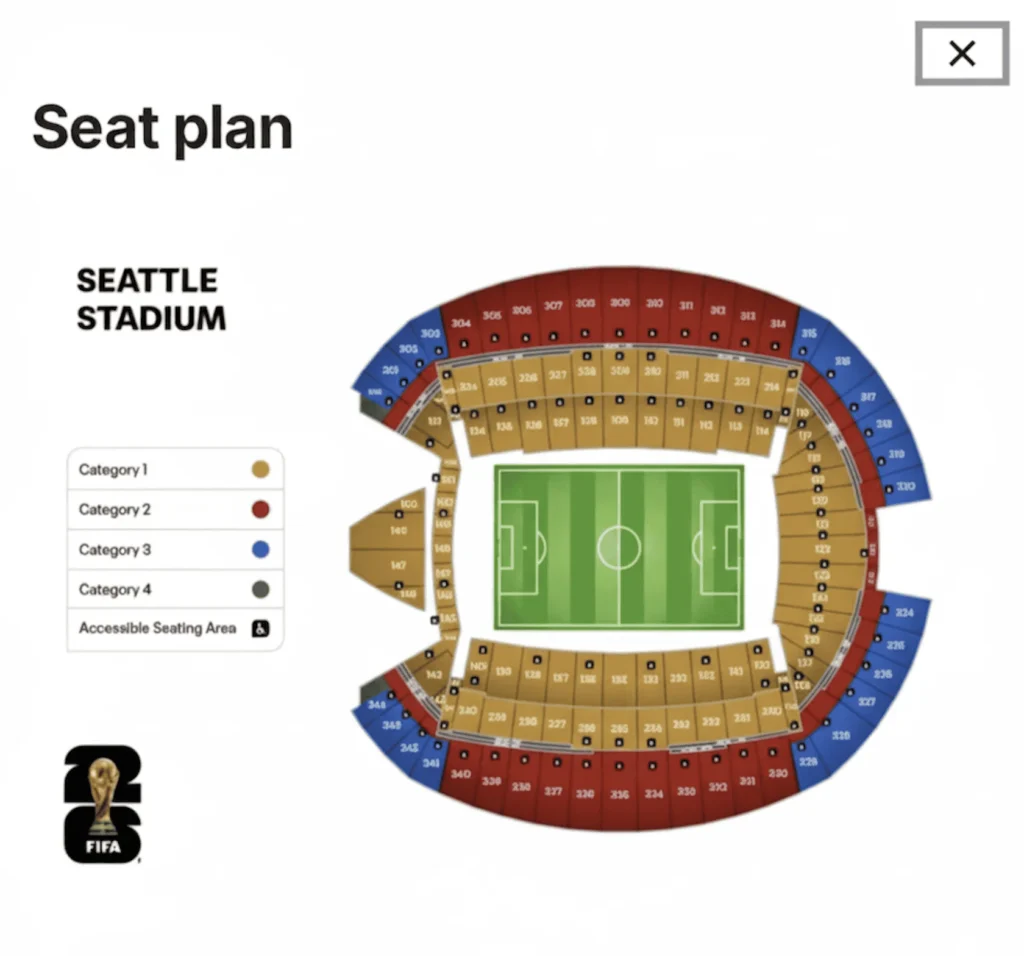
The seat Map combines lower and upper bowls, and the stadium’s steep design improves angles even from higher rows. In addition, premium areas include suites and club sections for fans who want a more elevated experience. The north end is also noted for offering standout views, adding to the unique Seattle setting. You can check also FIFA World Cup 2026 Stadium List.
Comfort, visibility, and the match atmosphere
One reason Lumen Field is so highly regarded is how the stadium design minimizes the feeling of distance from the pitch. Even when you are not in the lower rows, the steep bowl and close sightlines help matches feel immersive.
The stadium is also famous for crowd noise. The “12th man” effect is part of the venue identity, and the atmosphere can be a major factor in how games feel in the stands. For World Cup matches, that intensity can turn big moments into truly unforgettable memories.
Accessibility and fan movement inside the venue
Recent updates have expanded accessibility options, including more spaces for wheelchair users. On matchday, the stadium is built to handle large crowd movement, with wide concourses and multiple entry points. Still, it is smart to arrive early, because World Cup screening and entry routines can be heavier than regular season events.
Lumen Field History: From a New Era to a World Cup Stage
Lumen Field’s journey began in the late 1990s when Seattle pushed for a modern replacement for the aging Kingdome. Construction started in 1998 after public approval of funding, and the stadium opened in 2002 as Seahawks Stadium. This was a major shift for sports in the Pacific Northwest, and it created a venue built for atmosphere.
Over time, naming rights changed as corporate branding evolved. The venue became Qwest Field in 2004, then CenturyLink Field in 2011, and later Lumen Field in 2020 following rebranding. This timeline matters because older travel guides and fan discussions may still use previous names, which can confuse visitors.
Another key part of the stadium’s story is its football growth. It became the home of Seattle Sounders FC from their MLS debut in 2009 and quickly strengthened Seattle’s football identity on the national and international stage.
Evolution of the stadium through the decades
From the beginning, the stadium emphasized multi-purpose use. Early years leaned heavily toward NFL prominence, but football integration expanded quickly. By the 2010s, renovations added fan-focused improvements such as upgraded video boards and expanded viewing experiences. In the 2020s, the venue continued evolving through enhancements that reflect modern expectations for major events.
Major events that shaped Lumen Field
Lumen Field has hosted a long list of significant sports moments and major entertainment events. Football milestones include hosting the 2009 MLS Cup and becoming a regular stage for international competitions. It also hosted the 2013 CONCACAF Gold Cup and served as a venue during the 2016 Copa America Centenario, reinforcing its global football reputation.
In addition, a standout club milestone came when the 2022 CONCACAF Champions League final saw Seattle Sounders triumph, noted as a first for MLS teams. These moments helped establish Lumen Field as more than an American football stadium. Instead, it became a venue with a serious football identity, which fits naturally with the World Cup.
Fascinating Lumen Field Facts for World Cup 2026
Lumen Field has several features that make it especially interesting for World Cup visitors. Some are practical and help with planning, while others add to the matchday story you will remember long after the final whistle.
Roof coverage, views, and stadium design
One well-known detail is the partial roof design that covers a large portion of seats. This can be helpful for Seattle’s changing conditions, while the pitch remains open-air for match atmosphere. The open north end is also known for offering panoramic views that connect the stadium experience to the city setting.
Surface changes and tournament readiness
The venue is commonly associated with artificial turf for American football. However, the World Cup requires tournament-specific surface planning. In preparation for FIFA 2026, upgrades included planning for a natural or hybrid grass solution, with work described as beginning in late 2025 to align with world-level standards. This operational focus is part of what turns a major venue into a World Cup-ready stage.
Noise, culture, and matchday personality
Lumen Field is famous for crowd noise. The stadium atmosphere has been described as so intense that it can register in notable ways during big games. For World Cup matches, this “loud stadium” identity could add an edge to the experience, especially in high-stakes fixtures.
The venue also blends sport with local identity through features like public art and extensive screen coverage throughout the stadium. These details may seem small, but they shape how easy it is to navigate, meet friends, and stay connected to match moments from anywhere inside the venue.
Economic impact around the venue
The World Cup is described as a major boost for the wider region, with projections pointing to a significant injection into Washington’s economy and large visitor counts over the tournament period. For fans, this usually means a city-wide festival feel, but it also means higher demand for hotels, transport, and popular attractions.
Travel Tips for Attending World Cup Matches at Lumen Field
A successful Seattle match trip comes down to planning your transport, your stay, and your matchday routine. The good news is that the stadium location supports multiple travel styles, and the city offers plenty to do between fixtures.
Getting to Seattle and reaching the city center
Most visitors will arrive via Seattle–Tacoma International Airport, located about 15 miles south of central Seattle. From there, rail connections help link travelers into the city, which can make the arrival process smoother when roads are busy.
If you are arriving from nearby cities, rail and bus options can also be practical depending on your route and timing.
Getting to Lumen Field on matchday
Public transit is usually the simplest choice during major event days. Light rail and train options are frequently highlighted as efficient ways to reach the stadium area while avoiding heavy traffic and high parking costs. Rideshares and bike-share options can also work well for short distances, depending on your plans and comfort level.
If you do plan to drive, it helps to prepare early and expect higher demand near kickoff. Big tournaments create pressure on nearby routes, so building extra time into your journey is one of the easiest ways to protect your matchday experience.
Where to stay for easy access
Downtown Seattle and areas near Pioneer Square are often positioned as convenient for walking access and short transit links. If you want a lively post-match environment, neighborhoods with dining and nightlife options can make evenings feel like part of the tournament experience. However, hotel demand will be high, so booking early is a smart move.
What to pack and how to prepare for entry
Seattle conditions can shift through the day, so pack layers and bring rain-ready options. Comfortable shoes are also essential, because walking is a big part of matchday, whether you are using transit or exploring fan areas.
World Cup matches typically involve heavier screening than regular season games. Therefore, arrive early, keep your bag setup simple, and follow venue rules closely. Mobile tickets are also commonly used, so carrying a portable charger can help you stay ready from entry through the final whistle.
How to Make the Most of Your World Cup Week in Seattle
Many fans treat the World Cup like a festival, not just a match. Seattle supports that style of trip because you can combine matchday routines with iconic city experiences in between.
A simple Seattle match trip itinerary idea
Day 1: Arrival and city rhythm
Arrive, settle in, and explore downtown at an easy pace. If possible, do a stadium-area walk so you know the route before matchday.
Day 2: Matchday experience
Plan to arrive early. Enjoy the build-up around the stadium, then commit to a relaxed entry plan so you are in your seat well before kickoff.
Day 3: Seattle sights between games
Use the downtime for classic city stops like Pike Place Market or the Space Needle, then keep your evening flexible based on how you feel after matchday.
Day 4: Second match or city exploration
If you have another ticket, build the day around it. If not, use the day for a slower pace, because tournament weeks involve plenty of walking, standing, and late nights. You can check also Levi’s Stadium.
FAQs
The schedule includes Belgium vs Egypt, USA vs Australia, a playoff winner vs Qatar, Egypt vs IR Iran, plus two knockout matches with teams determined later.
Seattle is scheduled to host six matches at Lumen Field, including group stage fixtures and two knockout-round games.
It is expected to be listed as Seattle Stadium in official tournament materials due to FIFA venue naming rules.
Capacity is described around the high 68,000 to about 69,000 range for football events, depending on tournament configuration.
Public transport is usually the best option during major events, because traffic and parking demand increase sharply near kickoff.
Conclusion
Seattle’s World Cup matches at Lumen Field combine a strong football culture, a famous stadium atmosphere, and a schedule that stretches from group-stage variety to knockout-round drama. If you plan your arrival, transport, and matchday timing carefully, you will be set up for a smooth trip and a memorable World Cup experience in Seattle Stadium.