Hard Rock Stadium World Cup 2026, Miami Schedule, Capacity, History & Travel Tips
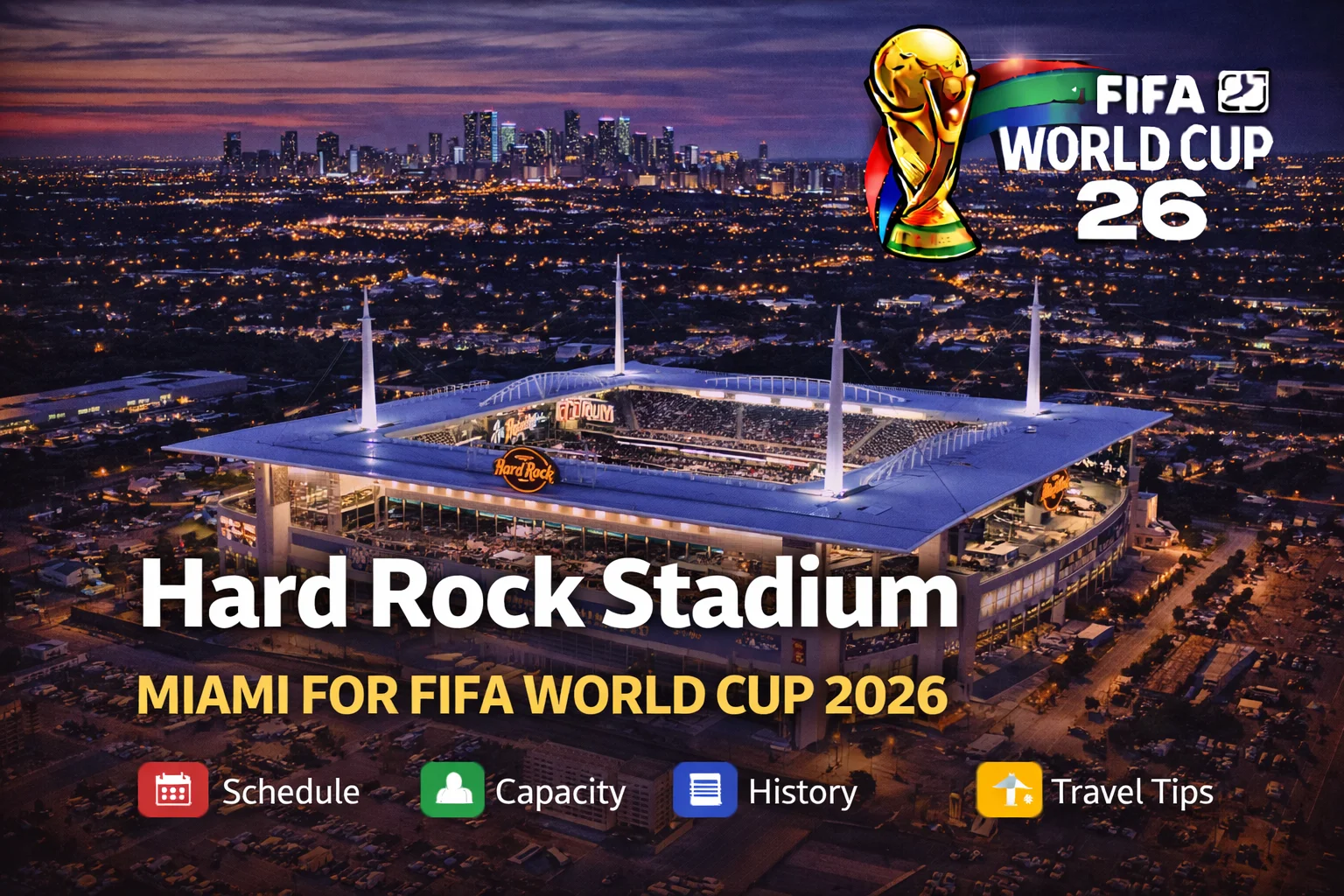
Hard Rock Stadium is set to be the headline venue for World Cup action in Miami Gardens. If you are searching for the Miami World Cup stadium, this is the place to know. It promises big match energy, a lively international crowd, and a city backdrop that mixes beaches, culture, and football passion.
During the tournament, the venue will be listed as Miami Stadium. This is part of FIFA’s approach to venue naming during major competitions. Fans will see “Miami Stadium” on official listings and match materials, even though the world knows it as Hard Rock Stadium.
This guide brings together the key details you need, including the Hard Rock Stadium World Cup 2026 schedule, seating capacity, stadium history, fun facts, and travel tips. It is written for fans worldwide who want clear planning help, smooth matchday logistics, and a better understanding of why Miami is such a major stop on the 2026 journey.
Why Hard Rock Stadium fits the World Cup spotlight
Hard Rock Stadium is more than the home of the Miami Dolphins. Since opening in 1987, it has built a reputation as a world-class venue for major sporting and entertainment events. Over the years, it has hosted six Super Bowls, WrestleMania, the Miami Open tennis tournament, and the Formula 1 Miami Grand Prix. Because of this track record, its place in the 2026 FIFA World Cup feels like a natural next step.
Miami’s selection also reflects the region’s deep connection to football. Local officials have emphasized that soccer is part of the community’s spirit, and the stadium has a long history of hosting high-profile matches. The venue has welcomed major global fixtures, including big club exhibitions, and it hosted the 2024 Copa América final. It also served as a venue for the 2025 FIFA Club World Cup, offering a meaningful test run before 2026.
2026 World Cup match schedule at Hard Rock Stadium
Hard Rock Stadium World Cup 2026 features seven matches across both group and knockout rounds. That mix makes Miami a high-value destination, not only for fans following a specific team, but also for neutral fans looking for the biggest moments.
The schedule spans from mid-June into late July. Importantly, Miami is not only hosting group stage games. It will also host a Round of 32 match, a quarterfinal, and the third-place match. Consequently, the city will see both early tournament stories and late-stage drama.
Complete fixture list for Miami Stadium
| Date | Kickoff Time (ET) | Match | Stage |
|---|---|---|---|
| Mon, June 15, 2026 | 6:00 PM | Saudi Arabia vs Uruguay | Group Stage |
| Sun, June 21, 2026 | 6:00 PM | Uruguay vs Cape Verde | Group Stage |
| Wed, June 24, 2026 | 6:00 PM | Scotland vs Brazil | Group Stage |
| Sat, June 27, 2026 | 7:30 PM | Colombia vs Portugal | Group Stage |
| Fri, July 3, 2026 | 6:00 PM | Winner Group J vs Runner-up Group H | Round of 32 |
| Sat, July 11, 2026 | 5:00 PM | TBD | Quarterfinal |
| Sat, July 18, 2026 | 5:00 PM | TBD | Third-Place Match |
What makes Miami’s match lineup special
Miami’s schedule includes four group matches plus three major knockout fixtures. That combination is rare and valuable. If you want the biggest matchday intensity, target the quarterfinal and the third-place match. On the other hand, if you prefer simpler logistics and potentially smoother midweek planning, the June group matches can be a smart choice.
One group-stage highlight is Colombia vs Portugal on June 27, a matchup that generated more ticket requests than any other game in the initial sales phase. Meanwhile, the Round of 32 match on July 3 adds a strong do-or-die atmosphere that often becomes the turning point of a team’s tournament.
Seating capacity, stadium features, and the matchday feel
Hard Rock Stadium is expected to have an intimate but electric World Cup setting. For World Cup soccer configurations, the venue is described as holding around 65,000 fans. Another listed figure for the stadium is 65,326 for the tournament, while its football seating is often described as about 64,767 and commonly rounded to roughly 65,000. Capacity can vary slightly because of media zones, security buffers, and hospitality layouts, yet the expectation is the same: a packed house and a loud, tight atmosphere.
The stadium includes a partial canopy that shields most spectators from rain and intense sunlight. In Miami’s summer heat, this detail matters. In addition, upgrades have added high-definition video boards in every corner, improving views and match presentation across the seating bowl.
Modern amenities fans can expect
Hard Rock Stadium has focused on improving comfort and convenience. Multiple entry points help reduce long wait times. Inside, fans can find diverse food options that include local Cuban sandwiches as well as international choices. There is also accessible seating and support for fans with mobility needs, plus charging stations and free Wi-Fi throughout concourses.
All of these features support a smoother day, especially during high-demand matches when crowds are heavy and timing becomes everything.
How Hard Rock Stadium compares to other 2026 venues
Miami’s venue is not the largest stadium in the tournament, yet it has unique strengths. This quick comparison helps place it in context.
| Venue | Location | Capacity | Notable Feature |
|---|---|---|---|
| Hard Rock Stadium | Miami Gardens, FL | 65,000 | Partial canopy roof |
| MetLife Stadium | East Rutherford, NJ | 82,500 | Hosts the final |
| AT&T Stadium | Arlington, TX | 80,000 | Retractable roof |
| Mercedes-Benz Stadium | Atlanta, GA | 71,000 | Halo video board |
A brief history of Hard Rock Stadium
Hard Rock Stadium’s story begins in 1987, when it opened as Joe Robbie Stadium. Founded by Miami Dolphins owner Joe Robbie, it was designed with soccer in mind, even though it quickly became known primarily for American football. Over time, the venue became a true multi-purpose hub, hosting major events across sports and entertainment.
It also spent a period as a baseball venue. In 1993, it hosted its first Major League Baseball team, the Florida Marlins, until their relocation. Along the way, the stadium experienced several name changes, including Pro Player Stadium and Dolphin Stadium, before adopting Hard Rock branding in 2016.
Major renovations that shaped the modern venue
A major overhaul from 2015 to 2016 cost over $350 million and reshaped the fan experience. Capacity was reduced from around 75,000 to the mid-60,000 range to improve comfort and premium spaces. The renovation added the distinctive canopy, modernized seating, and introduced upgrades like energy-efficient lighting.
This renovation era is key to understanding why the venue feels World Cup-ready today. It blends a modern matchday environment with decades of operational experience hosting massive crowds.
From American football hub to international soccer stage
Even though the venue missed out on matches during the 1994 World Cup due to scheduling conflicts, its international football profile has continued to grow. It has hosted major soccer events and high-profile matches, and that momentum now leads to its 2026 hosting role.
In simple terms, the stadium has evolved. It is still a legendary American sports venue, but it is also increasingly recognized as a global football destination.
Fun facts that make Miami Stadium unforgettable
Hard Rock Stadium has details that surprise even experienced travelers. Some are about branding and tournament rules. Others are about culture and design.
The name change you will see during the World Cup
During the tournament, the venue becomes Miami Stadium in official listings to follow FIFA naming rules. This is why match graphics, schedules, and signage will use the non-sponsored name.
Design and atmosphere details fans notice quickly
The seating bowl is steep, which helps sightlines and creates a more intense sound environment. In addition, the stadium’s partial canopy adds comfort and shapes the matchday vibe under sun, humidity, and sudden rain.
The venue is also known for its flexibility. It has hosted events that draw huge crowds and global attention, and it has appeared in films and music videos, blending pop culture with sports identity.
Unique experiences and memorable stadium moments
Hard Rock Stadium includes a SkyView gondola ride that offers panoramic views of the field and the Miami skyline. It is an unusual feature for a major stadium and adds to the feeling that this venue is a full destination, not only a match location.
The stadium’s parking lots are famous for transforming into tailgating zones during big events. Add advanced audio systems, historical plaques for major moments, and sustainability efforts like water conservation and recycling programs, and the venue becomes more than just seating and concrete.
Tickets and hospitality: how to plan your seat
Tickets are available through FIFA’s official ticket platform, with sales running in phases. Since demand is high, it is smart to register for a FIFA ID early and be ready when sales windows open.
In addition to standard tickets, official hospitality packages are offered through On Location. These packages include match tickets and can add premium seating, access to lounges, and upgraded food and beverage options. Some fans prefer single-match hospitality, while others choose multi-match packages to follow a team or cover every Miami Stadium match.
Because of the scale and popularity of Miami, planning early is the safest approach. Demand spikes even more once knockout matchups become clearer.
Travel tips for Hard Rock Stadium World Cup 2026
Miami Gardens sits between Miami and Fort Lauderdale. This location can work in your favor because you can choose hotel zones and airports that fit your budget and match schedule. However, it also means traffic planning matters, especially on matchdays.
Getting to the stadium from the airport and city zones
Transportation choices can shape your entire day. Public transport can help you avoid traffic pressure, while rideshare can be convenient but unpredictable.
Here are travel options mentioned for matchday planning:
- Metrorail connects Miami International Airport to nearby stations, with shuttles to the venue.
- A Metrorail and bus route can include traveling to Golden Glades and transferring to Metrobus 297.
- Brightline can be a strong option for regional movement. Fans can ride to Aventura Station and connect to a dedicated event shuttle bus to the stadium.
- Rideshare services like Uber and Lyft will use designated pick-up and drop-off zones, although surge pricing and delays can happen, especially after the match.
Driving is possible, yet parking can be limited and should be pre-booked when available. If you drive, arriving early is essential, and patience after the final whistle helps.
Matchday timing and entry planning
World Cup days move fast. Security checks and entry lines grow quickly. A helpful approach is to arrive at the stadium area at least two hours before kickoff, and even earlier for marquee matches like the quarterfinal or third-place match.
Also, packing light makes entry smoother. Many stadiums move toward cashless payment, so bring a working card plus a backup option.
Heat, sun, and rain: what to prepare for in June and July
Miami in June and July is hot, humid, and known for afternoon thunderstorms. That means comfort planning matters as much as ticket planning.
- Wear light, breathable clothing.
- Use sunscreen and stay hydrated.
- Carry a light poncho for sudden tropical showers.
- Wear comfortable shoes because you may walk more than expected.
The stadium canopy helps with shade in many areas, but sun exposure can still vary by section. When possible, choose seats and match times that support your comfort.
Where to stay for a smoother World Cup trip
Miami’s hotel map gives fans several choices. The right one depends on whether you want the classic Miami lifestyle, shorter travel time to the stadium, or better overall value.
Hotel zones that match different fan styles
Miami Beach and South Beach deliver iconic energy, beaches, and nightlife. The trade-off is higher prices and longer travel to the stadium.
Downtown Miami and Brickell offer modern hotels and strong city access. They can be efficient for fans who want dining, shopping, and quick movement around central areas.
Aventura, Hollywood, Fort Lauderdale, North Miami, and Miami Gardens can reduce commute stress and often provide better value. This can be especially useful during July knockout weeks.
Wherever you stay, booking early is recommended because rooms fill quickly. In addition, flexible cancellation options can help if your match plans change.
FAQs
Miami Stadium is scheduled to host seven matches, including four group games and three knockout fixtures.
The stadium is described as around 65,000 for soccer, with figures such as 65,326 also listed for the tournament, while its football capacity is often shown around 64,767.
Miami includes group stage matches, a Round of 32 match on July 3, a quarterfinal on July 11, and the third-place match on July 18.
Public transit and rail options can reduce stress. Plans mentioned include Brightline to Aventura Station with a shuttle, or Metrorail and bus routes, while rideshare is convenient but can surge and delay.
The venue will be listed as Miami Stadium to align with FIFA venue naming rules during the competition.
Enjoying Miami beyond the matches
World Cup travel is bigger than the 90 minutes on the pitch. Miami makes it easy to build a complete experience.
You can explore Little Havana for Cuban food and live music, enjoy the beaches between matches, and add Everglades tours for a different kind of Florida adventure. Many fans also plan time for neighborhoods like Wynwood and Brickell to experience the city’s creative side and dining scene.
Between matchdays, choose one major activity per day. That pacing helps you handle the heat while keeping energy for the stadium atmosphere at night. You can check also Arrowhead Stadium.