
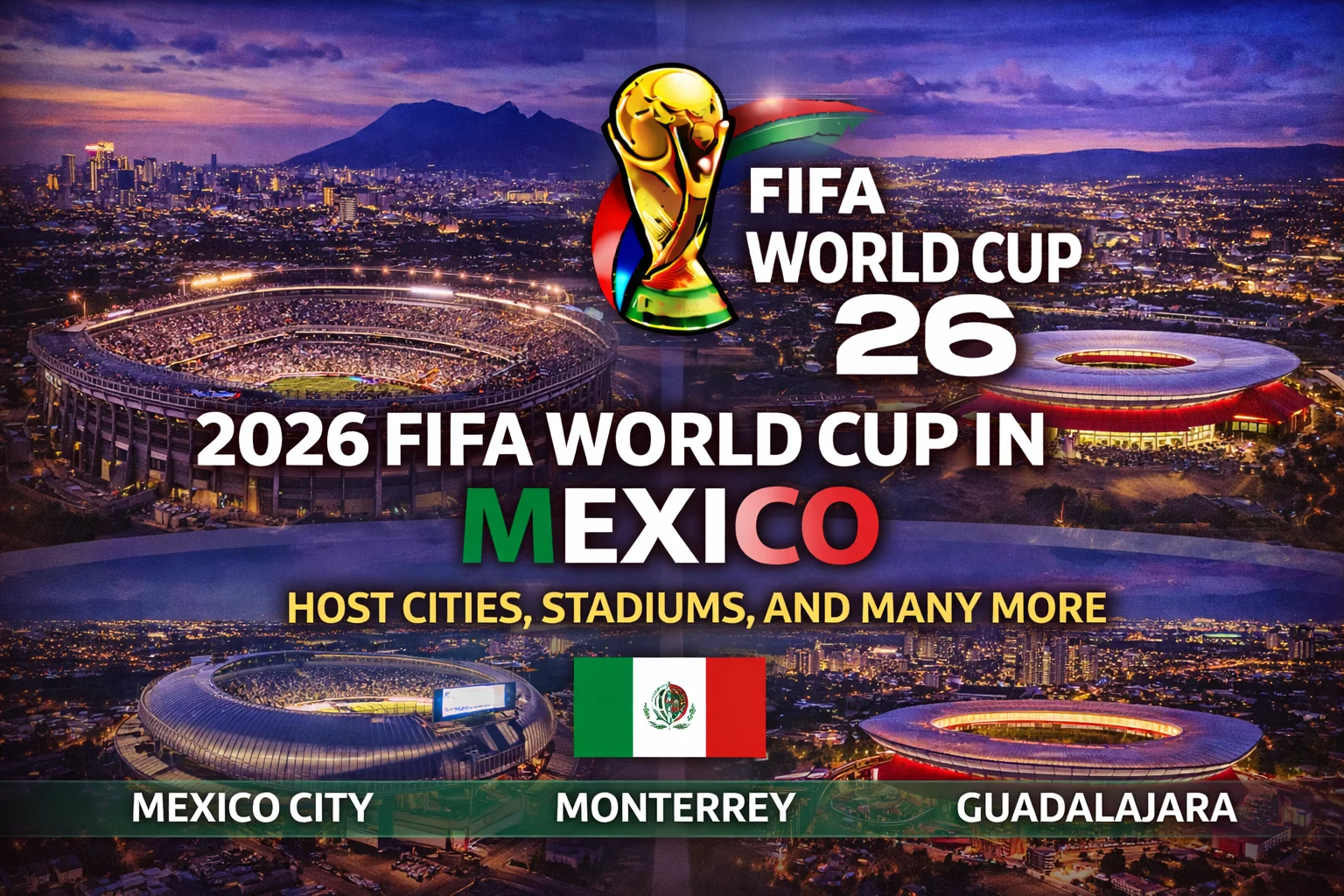
2026 FIFA World Cup in Mexico, Host Cities, Stadiums, Schedule, Tickets Guide
The 2026 FIFA World Cup in Mexico brings football back to a country that lives and breathes the game.
This FIFA World Cup 2026 hosted in Mexico is part of a bigger North American celebration, alongside the United States and Canada. It is also the first time three countries share hosting duties for the tournament, which adds new energy to every matchday.
This edition is larger than anything before it, with 48 teams and 104 matches across the tournament.
The tournament runs from June 11 to July 19, 2026, and the opening match is scheduled in Mexico City.
Because Mexico has hosted the World Cup before, the country’s role carries deep history and huge expectations.
Mexico previously hosted the tournament in 1970 and 1986, and that legacy still shapes the fan culture today.
Now, Mexico will stage 10 matches across three cities, with group games and early knockout action.
Even more importantly, the event is designed to feel modern, festival-like, and welcoming for visitors worldwide.
Overview of what’s confirmed for World Cup 2026 in Mexico
The headline change is the tournament’s expanded format, which increases the number of teams from 32 to 48.
In this new structure, twelve groups of four teams each replace the traditional format, and the tournament adds a round of 32. As a result, more nations join the competition, and the storylines begin earlier and run deeper.
The tournament dates are set for June 11 through July 19, 2026. Group matches run through late June, followed by knockout rounds that continue until the final on July 19. Mexico’s matches will be hosted in Mexico City, Guadalajara, and Monterrey, with a compact travel footprint for fans.
Mexico City will stage the opening game on June 11, 2026, at the Azteca venue after renovations conclude. Mexico is also placed in Group A, creating a major spotlight for local supporters from the very first day. Overall, this structure creates big moments early, while still building toward the knockout drama.
Mexico’s three host cities and what each offers fans
Mexico’s host cities reflect a blend of football passion, strong infrastructure, and distinctive local culture. Each city is expected to host a compact set of matches, which can make trip planning feel easier and more flexible. If you want the simplest experience, you can choose one city and build a full week around it.
Quick comparison table for Mexico’s host cities
| Host city | Stadium name used for 2026 | Estimated capacity | Best for |
|---|---|---|---|
| Mexico City | Mexico City Stadium (Azteca venue) | 83,000 | Opening match energy, history, big-city nightlife |
| Guadalajara | Estadio Guadalajara (Akron venue) | 48,000 | Culture, food, day trips, relaxed football tourism |
| Monterrey | Estadio Monterrey (BBVA venue) | 53,500 | Modern city, quick logistics, mountain views, comfort |
Mexico City: the opening-match capital with unmatched World Cup history
Mexico City is the main hub for the 2026 FIFA World Cup in Mexico experience. It hosts five matches, including the historic opening game, and it carries serious World Cup history. The city’s size, culture, and matchday intensity make it the “big moment” destination for many travelers.
Mexico City also brings a unique challenge because of its altitude, which can surprise visitors. Hydration matters more than you think, and pacing your day helps you enjoy the match without feeling drained. Fan zones and central landmarks add to the festival atmosphere around the opening week.
Guadalajara: culture-first football tourism with a modern setup
Guadalajara offers a vibrant, visitor-friendly base that still feels like a global football carnival. Known for mariachi music and tequila heritage, it provides a festive atmosphere for match weeks. It is often seen as a calmer choice than the capital, while still delivering big crowds and big emotions.
Guadalajara’s planning story also includes local engagement, with community programs building excitement. Because matches are clustered, you can plan meals, markets, and short trips without constant long-distance travel. For many fans, it is the perfect mix of culture and comfort.
Monterrey: efficient matchdays in a modern, high-energy city
Monterrey is the efficiency play for fans who want smoother movement and predictable services. As a northern industrial center, it offers modern facilities and strong hospitality options. It also attracts travelers from nearby border areas, creating a distinct international energy around matchdays.
Monterrey’s venue is known for mountain views and a modern stadium feel. If you want a three-to-five day football “sprint,” this city fits that style very well. Short trips can feel easier here because the rhythm of the city supports big events.
Stadiums hosting World Cup matches in Mexico
Mexico’s stadium choices blend football history with modern upgrades designed for a global event. Each venue is being prepared to meet strict standards for safety, technology, and fan experience. These stadiums will host group matches and early knockout action, creating big moments from the start.
Stadium overview table
| Stadium Name | Location | Capacity | Key Features | Matches Hosted |
|---|---|---|---|---|
| Estadio Azteca (Mexico City Stadium) | Mexico City | 83,000 | Historic site with three World Cup openings; renovated luxury boxes and turf | Opening match, four group games, one knockout |
| Estadio Akron (Estadio Guadalajara) | Guadalajara | 49,000 | Modern design with excellent acoustics; upgraded lighting and seating | Three group stage matches |
| Estadio BBVA (Estadio Monterrey) | Monterrey | 53,500 | State-of-the-art facility with mountain views; enhanced audio systems | Three group stage matches, possible round-of-16 |
Mexico City Stadium
The Azteca venue is undergoing upgrades to meet tournament requirements and improve accessibility.
Public reporting has also discussed a naming change tied to sponsorship, which is why names can vary online. For practical planning, the simplest approach is to follow the official “Mexico City Stadium” wording on tickets and schedules.
Renovation details in your planning notes include major upgrades such as improved turf and premium areas. The goal is a smooth reopening ahead of the June 2026 kickoff, with test events supporting readiness. For fans, this stadium is about atmosphere, history, and the feeling of being part of a landmark moment.
Guadalajara Stadium
The Akron venue in Guadalajara brings modern stadium comfort with a strong local football atmosphere. Upgrades focus on lighting, seating, and the overall stadium experience for large international crowds. Because the city’s pace can feel more relaxed than the capital, matchdays can feel easier to manage.
Monterrey Stadium
The BBVA venue in Monterrey is a state-of-the-art facility with enhanced audio systems and a modern fan experience. Local host-city information highlights playing-surface preparations designed for tournament conditions. This venue fits Monterrey’s overall theme for visitors: efficient planning, smooth movement, and strong services.
Schedule basics and how Mexico fits into the bigger tournament
The tournament runs from June 11 to July 19, 2026, with the opening match on June 11 in Mexico City.
Group matches run through late June, followed by knockout rounds that continue until the final on July 19. The new format introduces twelve groups of four teams, and it adds a round of 32 for a larger knockout path.
Mexico is set in Group A, creating a central storyline for local fans from the opening week. Planning notes also describe the opening match as Mexico vs South Africa on June 11, 2026, in Mexico City. For visitors, the best strategy is building a city-based plan first, then adjusting once tickets are secured.
How to plan before you have exact match tickets
Start by choosing your base city, because each city hosts a compact set of games. After that, book refundable hotels early when possible, because demand spikes around schedule releases and ticket phases. Finally, keep at least one free day between matchdays, because delays and fan events can reshape your plans.
Tickets, hospitality, and smart buying habits for 2026
Tickets are available through official phases, and many fans follow FIFA’s official portal for the safest approach. Prices range from general admission options to premium packages, depending on category and demand. If hospitality packages fit your budget, they can reduce stress with bundled services and structured access.
Simple rules to avoid ticket scams
Avoid paying by bank transfer to strangers, even if screenshots look convincing. Use platforms with buyer protection and verified delivery systems whenever possible. Also, do not share passport images or personal data in chat groups, because fraud often starts there.
Travel guide for fans attending matches in Mexico
Planning a World Cup trip to Mexico is easier when you build your trip around one city. Flights connect into major airports in each host city, which helps fans plan direct routes. There are also travel options mentioned in your planning notes, including high-speed trains between Mexico City and Guadalajara.
Accommodations range from luxury hotels to hostels, and early booking helps during peak demand.
Neighborhood choice matters because matchdays run late, and fans often move in crowds after the final whistle. In every city, using public transport and official options can make your day feel smoother.
Where to stay in each host city
- Mexico City: prioritize transport routes and reliable connections, not only vibes and nightlife.
- Guadalajara: choose walkable areas that feel comfortable in the evenings, because fans tend to roam after matches.
- Monterrey: choose convenience near business corridors and transport hubs for predictability on matchdays.
Matchday comfort: weather, crowds, altitude, and packing
June and July can bring heat, sun, and sudden rain depending on the city and week. Light layers, comfortable walking shoes, and a small rain option can make long matchdays easier. Because crowds will be heavy, leaving extra time for entry and transport reduces stress.
Mexico City’s altitude can surprise visitors, especially during long walks and stadium steps. Hydrate earlier than you think, limit alcohol before kickoff, and pace your stairs like you are saving energy. If you have medical concerns, keep your matchday plan simple and carry basic essentials.
What to pack for a Mexico World Cup week
Refillable water bottle, sunscreen, and a small power bank for your phone. A printed backup of tickets and hotel details, in case mobile coverage gets overloaded. One recovery outfit for rest days, because you will walk more than you expect.
Fan experience: fan zones, public viewing, and local culture
A World Cup trip is not only stadium time, because host cities build fan zones and public viewing hubs.
Mexico City planning includes major fan programming, including activities tied to central locations. Even if you miss a ticket, official viewing areas can still deliver a powerful tournament atmosphere.
How to enjoy Mexico respectfully as a visiting supporter
Learn a few basic Spanish phrases and use them kindly, even if your accent is imperfect. Respect local rules in public spaces and avoid disruptive behavior around families. Support local vendors and small businesses, because those moments often become your best memories.
Safety and practical travel tips for visitors
Large events attract opportunists, so simple habits help reduce risk without killing the fun. Keep valuables minimal on matchdays, and separate your cash from your main wallet. If you are moving at night, share your live location with a trusted friend.
A simple safety routine that works
Use official transport options when available and avoid isolated shortcuts after dark. Confirm pickup points before requesting rides, because crowd zones can be chaotic. If something feels off, trust your instincts and choose the boring safe option.
Economic and tourism impact across Mexico’s host cities
The Mexico portion of the tournament is expected to drive major tourism and spending across host regions. Projections in your planning notes describe billions in revenue from ticketing, merchandise, and visitor spending. Hotel bookings are expected to surge, boosting the hospitality industry and related services.
Tourism also grows because fans explore beyond stadiums, including historic and cultural landmarks.
Small businesses benefit from increased foot traffic, and restaurants and vendors expect record matchweek sales. Long-term impacts also include infrastructure improvements that remain after the tournament ends.
FAQs
Mexico’s host cities are Mexico City, Guadalajara, and Monterrey, and each city will stage multiple matches.
The opening match is scheduled in Mexico City at the Azteca venue, listed for the tournament as Mexico City Stadium.
Mexico will stage 10 matches across its three venues, including group games and early knockout action.
The tournament runs from June 11 to July 19, 2026, starting with the opening match in Mexico City.