Estadio BBVA World Cup 2026, Schedule, Capacity, Facts & Monterrey Tips
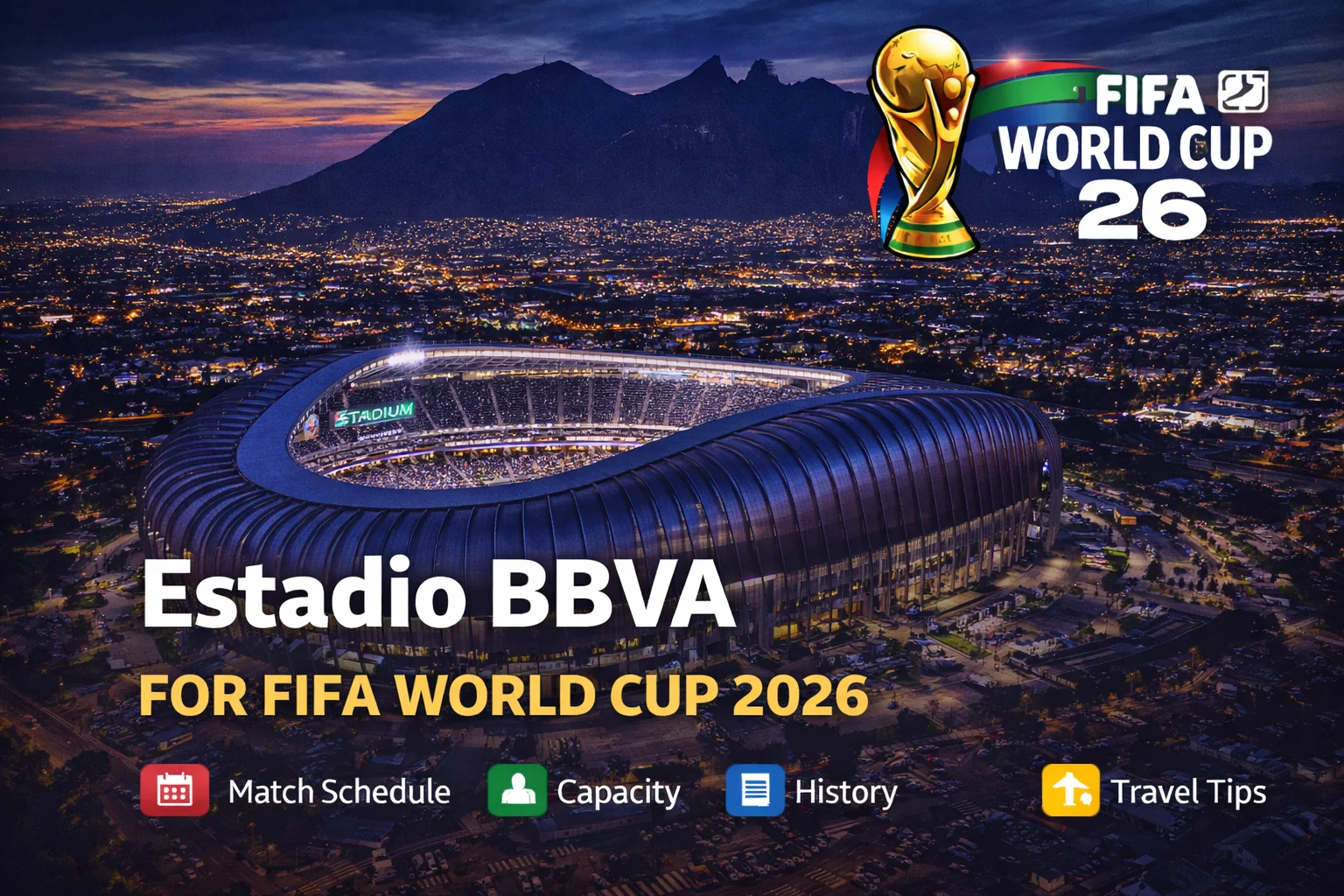
Estadio BBVA World Cup 2026 is set to be one of the standout experiences of the tournament, and not only because of the football. In Monterrey, Mexico, this modern stadium mixes state-of-the-art matchday comfort with a dramatic natural backdrop that fans instantly recognize in photos. Located in Guadalupe within the Greater Monterrey area, the venue is famous for mountain views and a skyline that frames the action.
For many supporters, the stadium is best known by its nickname, El Gigante de Acero. That name fits the atmosphere, the look, and the city’s industrial identity. As the tournament arrives, Monterrey also steps into a global spotlight, showing how it can host major international events while offering visitors a full city experience beyond the 90 minutes.
Estadio BBVA Name During the World Cup
During FIFA tournaments, stadium branding often shifts to neutral naming. For World Cup 2026, Estadio BBVA is expected to be listed officially as Estadio Monterrey. This approach keeps venue naming consistent across tournament communications, while still pointing clearly to the host city.
That detail matters for travelers, because tickets, schedules, and official updates may use the tournament name rather than the commercial name. In other words, if you see “Estadio Monterrey,” you are still looking at the same iconic venue known locally as Estadio BBVA.
History of Estadio BBVA and the Rise of Monterrey’s Modern Home
Estadio BBVA is relatively young, its story is strongly connected to Monterrey’s deep football culture. The project began after years of planning to replace Estadio Tecnológico, which had served as the home for CF Monterrey for more than six decades. The goal was clear, create a world-class stadium that could handle larger crowds, host major events, and represent the region with a modern identity.
Construction began in 2011 and continued for four years, shaped by private investment and an architectural focus on innovation. The stadium officially opened in August 2015 with a friendly match between CF Monterrey and Benfica, attended by more than 51,000 fans. From that moment, local football entered a new era, moving into a venue built for elite-level staging and global attention.
Construction, Cost, and the “Steel Giant” Identity
Estadio BBVA was built at a cost of approximately 200 million US dollars. Funding came primarily through private sources, including FEMSA. The build itself became part of the stadium’s legend. Materials included around 6,300 tons of steel and 57,000 cubic meters of concrete, creating a structure that looks and feels powerful. Over time, the venue’s scale and strength helped shape its nickname, El Gigante de Acero.
The stadium was designed by Populous in collaboration with Mexican firm VFO, with visual inspiration taken from Monterrey’s surroundings. Its roof is asymmetrical and often described as resembling an armadillo. Beyond the shape, the design was created to connect the venue to the Sierra Madre mountains and the city’s industrial character, including a façade tied to Monterrey’s metallurgical traditions and an aesthetic that some say evokes the region’s beer vats.
A Stadium Built for Fans, Not Just for Photos
Inside, the bowl is built to keep supporters close to the pitch. The design includes a grandstand incline of 34 degrees and distances minimized to FIFA standards, which strengthens sightlines and creates a more immersive feel. Just as memorable, the stadium intentionally frames Cerro de la Silla from the northwest seats, blending elite sport with a natural landmark that visitors will recognize instantly.
Estadio BBVA Capacity, Seating, and Stadium Features
Capacity is one of the first things fans search, and Estadio BBVA delivers a strong matchday scale. The venue holds up to 53,500 spectators, making it one of Mexico’s largest soccer arenas. Within that total, seating is structured to offer different experiences, from general admission energy to premium comfort.
Seating breakdown and comfort focus
The stadium includes 43,000 general seats, 5,000 club seats, and 324 luxury suites. It was built with comfort in mind, with ample legroom and strong sightlines across the stadium. That matters during a World Cup, because long entry lines and packed concourses are easier to handle when the core seating experience feels smooth once you reach your section.
Key venue details at a glance
| Feature | Details |
|---|---|
| Total Capacity | 53,500 seats |
| Field Dimensions | 265 x 223 feet |
| Surface Type | Hybrid grass system |
| Luxury Suites | 324 units |
| Club Seats | 5,000 seats |
| Construction Materials | 6,300 tons of steel, 57,000 cubic meters of concrete |
| Energy Efficiency | LED lighting reducing consumption by over 40% |
Sustainability and Design Facts That Make This Stadium Different
Estadio BBVA is not only a modern venue in shape and size. It also carries sustainability credentials that stand out in football. The stadium became the first football stadium in North America to receive a LEED Silver certification, highlighting an environmentally conscious approach. Additionally, the venue includes green spaces designed for rainwater filtration, supporting broader sustainability goals.
This blend of sustainability and spectacle is part of why the stadium feels like more than a sports facility. It functions as a cultural hub as well, drawing large crowds for concerts and international events, and building a reputation that extends beyond local league matches.
Fascinating facts fans love to share
There are plenty of quick facts that work well for matchday conversations, photos, and “did you know” moments:
- The asymmetrical roof provides shade for 80% of seats, helping protect fans from sun and rain while allowing natural light.
- It features the largest video screens in Mexican stadiums, measuring over 1,000 square meters combined.
- The venue has hosted over 2 million visitors since opening, showing its scale as an entertainment destination.
- Concerts by artists like U2 and Coldplay have drawn record crowds, proving the stadium’s multi-purpose strength.
- In 2022, it hosted the CONCACAF W Championship, adding experience with international events before 2026.
Estadio BBVA Match Schedule in Monterrey
Monterrey is set to host four World Cup matches at Estadio BBVA: three group-stage fixtures and one knockout match. With the tournament’s expanded 48-team format, the addition of a Round of 32 raises the stakes for that final game in the city. Monterrey offers a rare mix of group drama and elimination pressure in one place.
| Date | Match | Group/Round | Kickoff Time (CT) |
|---|---|---|---|
| June 14, 2026 | UEFA Playoff Winner B vs Tunisia | Group F | 8:00 PM |
| June 20, 2026 | Tunisia vs Japan | Group F | 10:00 PM |
| June 24, 2026 | South Africa vs Korea Republic | Group A | 7:00 PM |
| June 29, 2026 | Group F Winner vs Group C Runner-Up | Round of 32 | 7:00 PM |
What to expect from the venue’s fixture mix
This set of matches brings a wide spread of styles and football cultures, with teams represented from different confederations. The group-stage games set the rhythm for Monterrey’s tournament, while the Round of 32 match adds a clear edge: win and continue, or leave. That shift changes the energy in the stadium, and it’s often when a venue earns its World Cup identity.
Recent Updates and World Cup Preparations at Estadio BBVA
Preparing a stadium for the World Cup is about details, and Estadio BBVA has moved through major upgrades designed to meet international standards. Recently, a new hybrid pitch was installed in just 10 weeks, with advanced irrigation and aeration systems to support top-level playing conditions through heavy use.
Lighting has also been a major focus. The stadium is installing a state-of-the-art LED sports lighting system from Musco Lighting. This upgrade is designed to meet strict FIFA standards, reduce energy consumption by over 40%, and enable dynamic lighting effects that can transform the matchday atmosphere.
Beyond the pitch and lights, accessibility improvements have been implemented, including better ramps and seating options for disabled fans. Worker rights have also been emphasized, including inspections by international organizations to verify fair conditions. Taken together, these upgrades reflect a clear message: the stadium is not only preparing to host matches, but also preparing to host the world responsibly.
Travel Tips for Estadio BBVA World Cup 2026 Visitors
Monterrey is a busy, modern city, and World Cup travel will reward fans who plan early. With large crowds expected, the best strategy is to reduce stress through simple decisions: book accommodation early, pick transport options you can repeat confidently, and plan matchday timing so you are not rushing in the final hour.
Where to stay in Monterrey for match week
Many fans choose between central Monterrey and areas closer to Guadalupe. Staying central can be ideal if you want more restaurants and nightlife, while staying closer to the stadium can reduce commute pressure on matchday. Options like San Pedro Garza García are known for upscale stays, while downtown offers more budget-friendly choices and easier access to cultural areas.
Hotels near Fundidora Park can be a strong option for tournament atmosphere, since the area is widely associated with outdoor activity and city energy. It has also been mentioned as the likely location of an official FIFA Fan Fest, which can add a festival layer to your trip.
Getting to the stadium safely on matchday
Public transportation is often the most efficient option when crowds are heavy. The Metrorrey system is widely described as reliable, and Metro Line 1 is the key line discussed for reaching the venue area. Some guidance points to Exposición as the closest station, while other matchday plans reference Estación Lerdo de Tejada as a stop that can work with a short walk.
Buses also serve the area, with routes 214 and 223 mentioned as options that stop nearby and run late into the night. For convenience, rideshare services like Uber are used widely, although surge pricing is common on match days. If you plan to drive, arrive early, because parking spaces adjacent to the venue can fill quickly.
A simple matchday timing plan that lowers pressure
A World Cup day can feel intense, so an easy routine helps:
- Aim to arrive in the stadium district 2 to 3 hours before kickoff to reduce the stress of entry lines and transport delays.
- Eat before you enter when possible, because concession lines often spike when gates open and again at halftime.
- Save your return route and meeting points in advance, because rideshare pickup areas can shift after full-time.
Weather and Packing Tips for June in Monterrey
June in Monterrey is hot, and that reality should shape how you plan your day. Daytime highs are commonly around the mid-30s Celsius, so lightweight clothing matters. At the same time, short rain bursts can happen, so it helps to pack something small for sudden weather changes.
What to pack for an Estadio BBVA match day
To stay comfortable, focus on practical essentials:
- Breathable clothing, plus a hat and sunscreen for movement around the city.
- A refillable water bottle, and electrolytes if you expect lots of walking in heat.
- Comfortable shoes for metro walks, long stadium approaches, and slow exits after the match.
- A compact poncho or rain layer in case of quick storms.
Safety, Stadium Entry, and Bag Policy Basics
Major tournament days bring heavy security checks, so the best advice is to plan for time. Entry screening will be thorough, and crowds move more slowly close to kickoff. Keep your essentials organized, and try to travel light.
Bag rules matter as well. The matchday approach described here is simple: use clear bags no larger than 12x6x12 inches, or small non-clear bags up to 4.5×6.5 inches. Since checks can slow entry, arriving earlier gives you a better chance of settling in before the stadium energy peaks.
Finally, stay aware in crowded areas and use official apps for real-time updates. Also, choose a meet-up point with your group, because mobile networks can slow down after full-time when thousands of fans leave at once.
Food, Culture, and What to Do Around Your Match
A World Cup trip feels bigger when the city becomes part of the story. Monterrey is known for hearty northern Mexican flavors and a strong café culture, so it makes sense to build a “match + city” itinerary rather than rushing in and out.
Parque Fundidora is a popular option for outdoor time and a relaxed reset between matches, while Macroplaza offers a major city landmark experience. Cerro de la Silla is the iconic mountain reference point that shows up in stadium views, and it remains a defining image of the region. When it comes to food, many visitors aim to try cabrito and other regional favorites, keeping meals simple and early on matchdays to manage heat and timing. You can check also Mercedes-Benz Stadium
FAQs
The stadium is set to host four matches in total: three group-stage games and one Round of 32 knockout fixture.
The dates listed for Monterrey are June 14, June 20, June 24, and June 29, 2026.
The stadium holds about 53,500 spectators, depending on tournament configurations and operational layouts.
It is expected to be shown as Estadio Monterrey during World Cup 2026, following FIFA’s neutral stadium naming approach.
Many visitors use Metrorrey Line 1, with Exposición often referenced as the closest stop, followed by a walk or a short rideshare trip to the stadium gates.