Complete World Cup Stadium Distance from Airport Guide

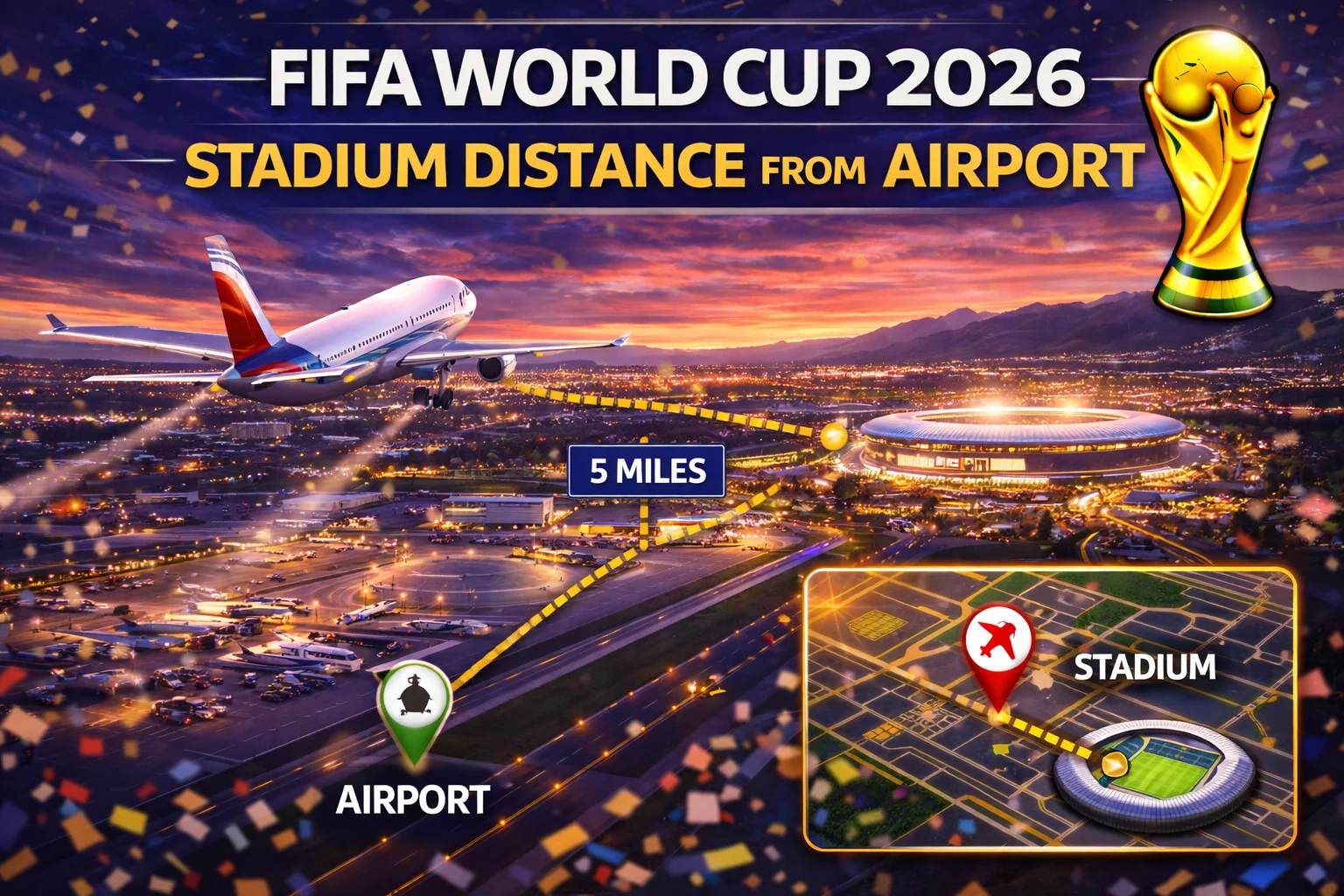
If you’re flying in for a match, World Cup Stadium Distance from Airport is one detail that can save your whole day. On paper, a venue might look close, but matchday traffic, security zones, and last-mile walking can turn a short trip into a stressful sprint.
Most 2026 host venues in this guide sit within roughly 10–30 miles (or 8–50 km) of their main airport, but drive times can swing widely. Build extra buffer on match days, and consider rail when it clearly beats the roads.
Why airport-to-stadium distance matters more than you think
For fans, distance is useful, but time is the real cost. A stadium can be only a few miles away, yet take 45 minutes or more when congestion hits. Matchday road closures and security perimeters can also force longer routes and longer walks.
This is why travel planning for World Cup 2026 host cities should start with two questions:
Where are you sleeping: near the airport, downtown, or near the venue?How are you getting to the stadium: car, taxi, rideshare, rail, or shuttle?
If you’re building a multi-city itinerary, this also affects flight choices. Sometimes the best airport for World Cup 2026 matches is simply the one that matches your hotel location and your matchday schedule, not the cheapest ticket.
World Cup Stadium Distance from Airport
The distances below are typical road distances with common driving times in normal conditions. Treat them as planning baselines, not promises, because traffic patterns can change quickly.
| Host city (stadium) | Primary airport (code) | Approx road distance | Typical drive time |
|---|---|---|---|
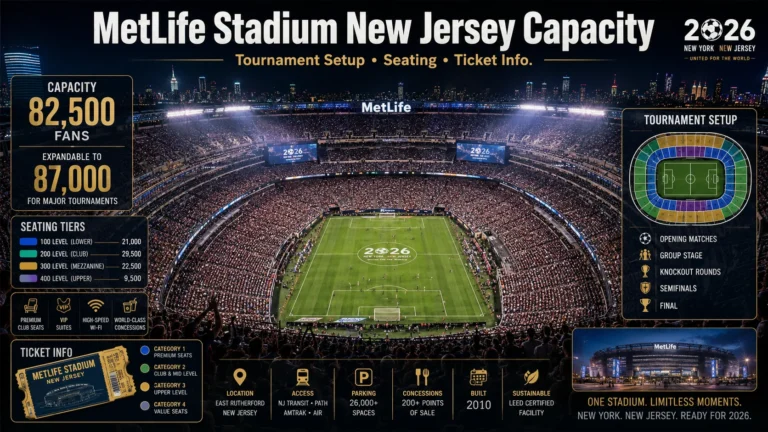
| New York/New Jersey (MetLife Stadium) | Newark (EWR) | 13 miles (21 km) | ~20–40 minutes |
| Los Angeles (SoFi Stadium) | Los Angeles (LAX) | ~6 miles (10 km) | ~15–45 minutes |
| Dallas (AT&T Stadium) | Dallas–Fort Worth (DFW) | ~13–16 miles (21–26 km) | ~20–45 minutes |
| Houston (NRG Stadium) | Houston Intercontinental (IAH) | ~24–29 miles (39–47 km) | ~35–60 minutes |
| Atlanta (Mercedes-Benz Stadium) | Atlanta (ATL) | ~10–11 miles (16–18 km) | ~20–45 minutes |
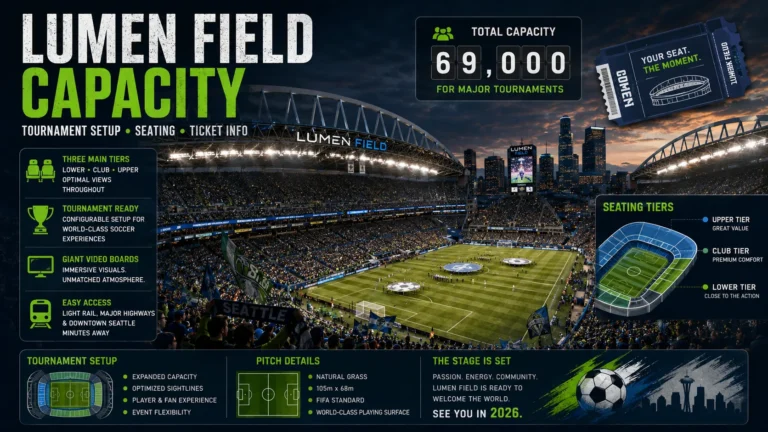
| Seattle (Lumen Field) | Seattle–Tacoma (SEA) | ~12 miles (19 km) | ~20–50 minutes |
| Miami (Hard Rock Stadium) | Miami (MIA) | ~14 miles (23 km) | ~25–60 minutes |
| Philadelphia (Lincoln Financial Field) | Philadelphia (PHL) | ~6–7 miles (10–11 km) | ~15–35 minutes |
| SF Bay Area (Levi’s Stadium, Santa Clara) | San Jose (SJC) | ~5 miles (8 km) | ~10–30 minutes |
| Boston area (Gillette Stadium, Foxborough) | Boston (BOS) | ~26–31 miles (43–50 km) | ~45–90 minutes |
| Toronto (BMO Field) | Toronto Pearson (YYZ) | ~23–24 km | ~20–60 minutes |
| Vancouver (BC Place) | Vancouver (YVR) | ~13–14 km | ~25–60 minutes |
| Mexico City (Estadio Azteca) | Mexico City (MEX) | ~20–23 km | ~20–60 minutes |
| Guadalajara (Estadio Akron) | Guadalajara (GDL) | ~31 km | ~30–75 minutes |
| Monterrey (Estadio BBVA) | Monterrey (MTY) | ~23 km | ~25–70 minutes |
Use this snapshot when you’re comparing host city airport locations 2026 and trying to estimate airport to World Cup venue transfer time. It’s also handy when you’re picking hotels and deciding whether you can rely on public transport to World Cup 2026 venues.
How to choose the best airport for your match plan
Match your airport to your hotel strategy
If you want fan zones, nightlife, and easy city exploring, staying closer to city centers usually feels simpler. If you want lower hotel rates, airport areas can be cheaper, but you must plan earlier departures and expect longer last-mile walking.
A practical approach is “open-jaw” travel for multi-city trips: fly into one host city and fly out of another. It reduces backtracking and can cut travel time between matches.
Think in transfer time, not just distance
World Cup 2026 travel time from airport depends on three things:
- Traffic windows (rush hour plus matchday surges)
- Security perimeters and road closures
- How far you still need to walk after drop-off
Even FIFA World Cup 2026 stadiums that are close can become slow in heavy traffic markets. So when you’re mapping driving distance airport to stadium World Cup 2026, plan for delays rather than perfect conditions.
Use public transport when it’s clearly faster
In some cities, rail can beat roads on matchday, especially if you’re traveling from downtown. Vancouver is a good example where airport rail connectivity can make planning smoother for many fans.
Still, be honest about transfers. If a route needs multiple changes, it can feel harder when crowds surge before kickoff. When in doubt, choose the simplest route with the fewest steps.
World Cup 2026 stadium transport options
Rideshare and taxi: convenient, but plan the pickup zones
Rideshare is easy, but pricing often surges after matches. Taxi lines can also grow fast. A simple trick is to walk to a calmer pickup area outside the busiest zone, then request your ride.
If you’re searching for taxi fare airport to stadium 2026, remember that pricing can vary by time of day, traffic, and local demand. Build flexibility into your budget.
Shuttles and event buses: watch for official updates
World Cup 2026 shuttle services can be helpful, especially when venues restrict private vehicles near kickoff. These plans can change close to the tournament, so keep your matchday transportation flexible and check official guidance when it’s released.
Driving and parking: good for some venues, risky for tight schedules
Driving can work well if you’re traveling with a group and splitting costs. The risk is time uncertainty. Parking, walking, and leaving after the match can take longer than people expect.
If your plan includes driving, treat parking as part of the journey. You’re not “there” when you enter the parking area. You’re there when you reach the gate.
Matchday buffer rules that reduce stress
Short distances can still produce long delays. To protect your day, use a simple buffer rule:
- Group stage: arrive in the stadium area 2.5 to 3 hours early
- Knockouts or marquee games: arrive 3.5 to 4 hours early
- Final-level demand: plan 4+ hours early in big markets
Also, avoid landing on matchday if you can. A delayed flight plus long airport lines plus traffic is a tough combo. If you must do it, choose an early arrival and keep your plan simple.
Common mistakes to avoid when planning airport connectivity
Booking a tight connection on matchday
Landing and heading straight to the stadium is a gamble. If the match matters to you, arriving the day before is the safer play.
Forgetting local time and kickoff traffic windows
A late afternoon or evening kickoff often overlaps with rush-hour traffic. If your match sits in that window, add buffer automatically.
Ignoring last-mile walking
Even if a car drops you “near” the venue, closures can force a 10–30 minute walk. Comfortable shoes and a simple bag can make a bigger difference than you’d think.
FAQs
Conclusion
World Cup 2026 trips get easier when you plan the airport-to-stadium leg like it’s part of the match experience. Use the distance table as a starting point, then choose transport options that reduce steps and add realistic buffer time. The goal is simple: arrive early, stay calm, and enjoy the day.